Saving Bacchus: How C.S. Lewis redeemed the pagan god of wine and wild parties

Saving Bacchus: How C.S. Lewis redeemed the pagan god of wine and wild parties

Recently, I’ve begun reading The Chronicles of Narnia to my daughters. You must do this as a Christian parent, or you forfeit your credentials. So I comply.

Fortunately, Lucy and Penelope love the books, and I’ve enjoyed the change from Disney princesses whose primary aim is to meet a man and live in a castle.

We just finished Prince Caspian, and near the end, Aslan arrives to help the Narnians. In gratitude, the spirits of the trees begin to dance, and all the creatures join together in a raucous celebration. It’s basically a rave, minus the Molly and the techno.

The party is led by a figure known as Bacchus.

He appears as

a youth, dressed only in a fawn-skin, with vine-leaves wreathed in his curly hair. His face would have been almost too pretty for a boy’s, if it had not looked so extremely wild. You felt, as Edmund said when he saw him a few days later, “There’s a chap who might do anything – absolutely anything.”

self-portrait_as_the_sick_bacchus_by_caravaggio

WHO IS BACCHUS?

Unbeknownst to my daughters, Bacchus (also called Dionysus) is the pagan god of wine, fertility, and wild parties. The Latin translates to “Kardashian.”

For the Greeks, his symbol was the phallus, and he was accompanied by a throng of women, the Maenads, who danced and sang around him. The Maenads also make the trip to Narnia.

As Lewis writes:

Bacchus … and the Maenads began a dance … and where their hands touched, and where their feet fell, the feast came into existence.

Thus Aslan feasted the Narnians till long after the sunset had died away, and the stars had come out … And the best thing about this feast was that there was not breaking up or going away, but as the talk grew quieter and slower, one after another would begin to nod and finally drop off to sleep with feet towards the fire and good friends on either side.

It sounds fantastic. Yet the question is why Lewis decided to have the pagan Bacchus lead the celebration of the Christ-cat.

The fundamentalist internet knows why.

INTERNET OUTRAGE! 

It turns out, C.S. Lewis was a closet pagan, whose true desire was to turn your children into tiny Satanists. It’s true; I read it on a blog with multi-colored font (see: “homemakerscorner.com”). And who could doubt it, for as the blogger writes:

What Lewis is describing here is nothing other than a Bacchanalian orgy!

(Well, yes, minus the sex.)

The post goes on:

C.S. Lewis was a master of combining … heathen myths to develop his plots. Worst of all, this is for children! … It’s too bad nobody ever explained to him the consequences of such behavior. … Perhaps he would not have cared. Perhaps he had a known “calling” for his father the devil which he was willingly fulfilling.

And “homemakers corner” is not alone.

A quick Google search finds many sites, some even with monochrome font, decrying Lewis’ debauchery, his paganism, and what’s worst: his similarity to J.K. Rowling (*makes sign of the cross).

So why did Lewis do this?

SAVING BACCHUS

Three points:

First, it is clear that Bacchus’ Narnian revelry has been reformed in crucial ways. Thus there is no mention of sexual looseness, drunkenness, or pagan worship.

Second, it is also clear that Lewis’ view of the party god is hardly uncritical, for he has Susan say to her sister:

I wouldn’t have felt very safe with Bacchus and all his wild girls if we’d met them without Aslan.

Third, and quite important, is Lewis’ belief that even paganism got certain things right about the divine, even though they got other things dreadfully wrong (See Till We Have Faces; also Paul in Acts 17).

Indeed, what the Maenads knew, far better than Ned-Flanders-Christianity (TM), is that with the divine comes festival joy. Consider, for instance, how many of Christ’s parables involve parties. And consider also the critiques of Pharisees against him.

Thus, one of Lewis’ goals throughout his writings is to show that true delight is not tamped down, but rather found in Jesus. As he famously wrote in The Weight of Glory:

It would seem that our Lord finds our desires not too strong, but too weak. We are half-hearted creatures, fooling about with drink and sex and ambition when infinite joy is offered us, like an ignorant child who wants to go on making mud pies in a slum because he cannot imagine what is meant by the offer of a holiday at the sea. We are far too easily pleased.

Given this, Lewis’ point is not to elevate the Greek god of parties, but to show that true mirth is found in Aslan’s presence.

As I heard someone say once:

I seriously doubt that Christians will have much to say to the world until we can learn to throw better parties.

That’s true, and it has nothing to do with embracing drunken licentiousness. 

LORD OF THE WINE

But why use Bacchus?

This, of course, is the objection from the rainbow-fonted internet.

Why not create a less phallo-centric mythological creature to deliver this lesson, like a talking cucumb… (okay, bad example) tomato, a talking tomato?

newer-larryboy-larry-the-cucumber-veggietales-30496594-186-216

One last point:

Interestingly, it may be that the selective nod to Bacchus was not original to Lewis.

It may trace back to Christ himself.

In John 2, Jesus’ first miraculous sign is not the healing of a leper, the raising of the dead, or the restoration of lost sight. Instead, it is the creation of over 120 gallons (!) of the headiest wine imaginable—enough to overflow three bathtubs—and this, to keep a dying party from going dry.

There is much symbolism here, but as Tim Keller notes in the best sermon I have heard on the text (here), one intended echo may have been the Dionysian tales of the hills running with wine and revelry.

In this miracle, Christ was showing himself to be the true Lord of the Wine, and the true bringer of festival joy.

This matters, as Keller says, because most people reject Jesus for the wrong reasons. They do so, because they fear that it will cost them mirth. Yet as both the Psalmist and the Maenads knew, in the presence of the divine

“there is fullness of joy; at your right hand are pleasures forevermore” (Ps. 16).

And while one may say this with a talking tomato, I prefer Lewis’ approach.

 

Why you should be more excited about your local school bond than about Trump vs. Clinton

Why you should be more excited about your local school bond than about Trump vs. Clinton

This week, my fellow citizens in small-town (Bartlesville) Oklahoma, go to vote.

Yet the choice is not about Republicans or Democrats.

It is a bond issue that will attempt to shield our local schools from crippling budget cuts.

asvcwp66

Turnout is expected to be very low.

And that’s a shame, because there are lots of reasons to be FAR more excited about a local school bond, than there are to be excited about either Donald Trump or Hillary Clinton.

Here are five:

  1. BECAUSE TRUMP IS GOING LOSE, NO MATTER HOW MANY FACEBOOK POSTS YOU WRITE.

He just is—and for lots of reasons. But mostly because we haven’t seen this kind of mind-numbing self-sabotage since Ryan Lochte called his mom from Rio. Given this, it would make more sense to direct your political passion to other votes at the state and local levels.

  1. BECAUSE UNLIKE THE PRESIDENTIAL RACE, THE MAIN OPTIONS DON’T FEEL LIKE A REQUEST TO CHOOSE YOUR FAVORITE CANCER.

Unlike Trump v. Clinton, your local school bond is far less likely to feel like a lose/lose choice. It’s a simple decision either up or down. And as a colleague of mine put it, it is different from the presidential ballot because it feels much less like you’ve been asked to pick your favorite Menendez brother.

  1. BECAUSE YOUR LOCAL SCHOOL BOND IS NOT DECIDED BY PEOPLE IN FLORIDA AND OHIO (*UNLESS YOU LIVE IN FLORIDA OR OHIO).

In small elections, at the state and local level, your vote carries much more weight in determining the outcome. Yet our passions are often illogically focused on races in which your vote will make no difference at all. To be clear, that’s not an invitation to skip the Presidential ballot, but it is a request to Google “electoral college” if you think I’m wrong.

Sadly, it’s the races that we often ignore that give us the biggest opportunity to make a difference.

  1. BECAUSE NO MATTER WHO IS PRESIDENT, PUBLIC SCHOOLS ARE HEAVILY INFLUENCED BY FOLKS AT THE STATE AND LOCAL LEVELS.

In my home state of Oklahoma, our public schools are woefully underfunded. We pay teachers terribly. And we pay a heavy price for it. In the end, there are lots of reasons for this, but none of them have much to do with who is President. Our teachers were paid poorly under Bush, Clinton, Bush, Obama, etc. And the solution to that problem will not come by way of the Presidential ballot.

  1. BECAUSE THE SCHOOL BOND IS NEITHER A REPUBLICAN NOR A DEMOCRAT.

These days, almost everything boiled down to the awkward binaries of Republican or Democrat, liberal or conservative.

Thus it is refreshing to vote on something that is simply an important issue, and not a purely partisan one. This week, many of my Republican friends will join me in voting “Yes” on our school bond, as will many of my Democratic ones.

(If you disagree, that’s okay too.)

But in this vote, the mud slinging of Trump vs. Clinton won’t matter.

Because the choice is about our kids, like my kindergarten daughter.


I Changed My Mind

I Changed My Mind

As someone once said:

“The only way to prove that you still have a mind is to change it occasionally.”

While the statement is meant to be humorous, I want to ask about the potential truth within it.

The question is this: Is there a link between wise and winsome people—the people we would like to emulate—and the ability to change one’s thinking on important issues over time?

In some cases, the answer would seem to be “No.”

After all, it is quite possible to change one’s mind for the worse. No one is born a racist, a proponent of “all natural deodorant,” or an Oakland Raiders fan. So there is nothing inherently good in simply reaching a new conclusion. Sometimes it’s bad.

Likewise, it is possible to “flip-flop” to a fault, changing majors fifteen times within a college career, or being like the wafflers in the lowest level of Dante’s Paradiso, who are “inconstant in their vows.” (The kids love Dante!)

349px-15th-century_painters_-_portrait_of_dante_alighieri_-_wga15992
Dante Alighieri. Divine Comedian. Wearer of awesome bedtime hats.

Despite this, I think most would say that the willingness to change one’s mind, and to admit publically that one was wrong, is a rare virtue in a world of ossified opinions and stick-to-your-guns stubbornness.

After all, there are no points for going down with your ideological ship once it hits the iceberg of Reality.

META-NOIA

And for Christians, the ability to change one’s thinking is actually a command.

In the New Testament, the Greek compound for “repentance” (metanoia) can be translated literally as a “change of mind.” Yet while Martin Luther once claimed that the whole of life should be characterized by this humble action (see his 95 theses), few would claim that Christians are particularly known for this.

More commonly, we are known for close-mindedness. And while the label can be unfair (note: the intolerance of the “tolerant”; see here), sometimes we earn it.

So how do we change that?

AN UNUSUAL CHAPEL SERIES

When I was in seminary, the director of the chapel program dedicated an entire semester of Friday sermons to a series called: “I Changed my Mind.”

Then, he invited respected professors to give messages on how they came to think differently about an important theological or social issue. As far as I remember, some of the offerings included:

  • “Women in ministry leadership.”
    • i.e., I used to think the Bible forbade it; now I don’t.
  • “Politics.”
    • i.e., I used to think that Republicans were basically “God’s party”; now I don’t.
  • “War and Peace.”
    • i.e., I used to believe that the New Testament required pacifism; now I espouse a cautious version of Just War theory.

In the end, the purpose of the series was not to get everyone to agree, but to show how serious  believers had wrestled with a particular issue, and then come to the conclusion that they had been wrong.

So they changed their minds.

In no case did this happen because they lost an argument. And in zero instances did it happen in the post apocalyptic world of internet comment boxes–where civil discourse goes to die.

Yet the series was meant (I suppose) to show students that even smart people need to continually re-examine their assumptions, entertain opposing views, and be willing to change if evidence demands it.

None of us have “arrived.”

All facts are friendly.

And as Luther argued, meta-noia ought to characterize the whole of life.

In terms of education, I love the words of Rosaria Butterfield:

“Good teachers make it possible for students to change their minds without shame.”

I hope to embody that this semester.

HOW I’VE CHANGED

But what about my own views?  Despite remaining relatively constant in core commitments, I’ve also experienced mind change. And not just “way back then.”

In my discipline, I started a doctoral dissertation with the intent of blaming Augustine of Hippo for any number of deficiencies within the western intellectual tradition. I ended up with a rather different conclusion.

In politics, my once predictable midwestern/evangelical views have become much more complex. Thus I now find myself as a faculty sponsor for a student group called the College Independents. (Because picking between Donald Trump and Hillary Clinton sounds like being asked to choose your favorite cancer (See here and here for more on that).)

In parenting, I was once adamant that my kids would go to public school “just like I did.” And while our daughter will start public kindergarten this week, our current philosophy is more fluid: As in, we’ll see how it goes and reevaluate based on the “situation on the ground.” No more dogmatism. Do what works for you. (But seriously, let’s pay public school teachers more; my home state of Oklahoma should be ashamed.)

CONCLUSION

So in some cases, the humorous quote has merit: The only way to prove that you still have a mind is to change it occasionally.

Now two questions:

On what important issue have you changed your mind?

And how did that happen?

Is G.P.A. Destructive? A Response to David Brooks and a Rant on Education

Is G.P.A. Destructive? A Response to David Brooks and a Rant on Education

“[The] grade-point average is one of the more destructive elements in American education.”

So says David Brooks in a recent Op-Ed for the New York Times (here).

In his view:

“Success is about being passionately good at one or two things, but students who want to get close to that 4.0 have to be prudentially balanced about every subject. In life we want independent thinking and risk-taking, but the GPA system encourages students to be deferential and risk averse, giving their teachers what they want.”

David Brooks
David Brooks

For the record, I like Brooks. Yet my question now is whether he’s right in this particular contention. As a teacher, I’ve thought about the matter a bit, and I’ve even had my own frustrations with the American elevation of broad-spectrum academic standards (like GPA).

Here’s a personal example:

ON MATH AND HERESY

After grad school, I wanted to do a PhD in theology. Yet in America, a key part of the application process is one’s GRE score. The GRE is something like the ACT on steroids, and it includes a written composition portion along with verbal and quantitative elements (aka “math”).

Sadly, I am terrible at math. Actually, I don’t “math,” which is one reason I specialized in trinitarian theology. In the Trinity, One = Three and Three = One. And if you object to that with “math,” you’re a heretic.

The GRE is a heretic (*sarcasm).

So while I achieved the highest possible mark on my written composition, my overall score was torpedoed by important theological skills like Long Division. I was not accepted.[1]

Then I applied to a great school in the UK (Manchester). Oddly, their entrance requirements had to do with (wait for it…) theology.

I got in, and finished ahead of schedule.

This brings me back to Brooks’ claim:

“Success is about being passionately good at one or two things, [not] prudentially balanced about every subject.”

I agree.

But here’s a complicating factor.

SPECIALIZED MORONS

At the same time that Brooks is critiquing the kind of broad-spectrum acumen that the GPA rewards, others are decrying the technical specialization that is rapidly replacing a liberal arts education.

The argument here is that while the migration to specialized STEM majors (Science, Technology, Engineering, or Math) may lead to a bigger paycheck initially, it can also fail to form the person broadly. And in some cases (not all), this results in highly specialized morons.

To back this up, many recent articles have highlighted the benefits of a broad-spectrum liberal arts education, even for those who eventually go into fields like business, science, and technology.

One of these articles comes from a Wheaton College grad, Alex Soholt. As he argues (here), broad training in the liberal arts has major benefits over exclusive specialization. Here are a few:

  • Liberal (i.e. “broad”) education teaches students how to think and learn for a lifetime. It does so by emphasizing a variety of skills, especially critical thinking and analysis that go far beyond the execution of a particular task.
  • Liberal education helps students to see things whole. As Soholt notes, the industries of the world are connected, like systems in a human body. If one fails, others are affected. Think, for instance, about the housing crisis of 2008, and the ensuing domino effect.
  • Liberal education enhances wisdom and faith. This is crucial. Education is meant to form the person, not just enable the acquisition of a paycheck. Think again of the housing crisis, and ponder what even the barest amount of morality and wisdom from the big banks would have done to change things. Just because something is lucrative and legal, that doesn’t mean it’s wise.
  • Liberal education contributes to joy. This last point is among the most important, but I’d like to address it through another personal example/rant.

WHY SHAKESPEARE DIDN’T MAKE: A RANT

For this semester, I was looking forward to auditing our college Shakespeare class. I have always wanted to do this, and the course only happens every couple years. (see here for why I decided to start doing this.) I talked with the professor, and got permission.

Then a problem emerged. Shakespeare didn’t “make.” In essence, no one else signed up to take it. More precisely, out of an undergraduate population of around six hundred students, two people enrolled in Shakespeare. Two!!!

“How is that possible!?” I asked. How is it that in a liberal arts university, only two people out of six hundred signed up to study the single most important writer in the English language? How can that be!?

I’ll tell you how. Or rather, I’ll tell you one reason. In large measure, we have forgotten that education is not just about checking off  requirements so that you can graduate. It’s not just about staying (barely) eligible so that you can play your sport. Nor is it merely about maximizing your “earning potential.” Education is also about maximizing JOY. And I don’t care what your major is, learning to appreciate great literature, great art, and great thinkers will make YOU better, no matter what field you settle in.

Increasingly, this reality is being noticed even in business and technology sectors, which have begun hiring more English and humanities majors in search of people who can write well, think broadly, and draw upon a number of disciplines (see here).

A POSSIBLE COMPROMISE 

So which is it?

Should we stress being “passionately good at one or two things” (Brooks)—and perhaps deemphasize the GPA? Or should we encourage students to study broadly as in a true liberal arts environment?

The answer is “Yes.”

At some point, one must drill deeply into an area of specialization. This is good. And at this stage, a poor score in an unrelated field (in my case, math) should not impede one as much as it sometimes does in the American model. Brooks is right about this. And too much focus on the GPA is a problem.

Yet at the same time, we must encourage undergraduate students especially to use electives to dabble widely, especially in the liberal arts. This way, they are more likely to be shaped as whole people and not just as narrowly knowledgeable one-trick ponies.

This need not mean abolishing the GPA, but it does mean changing how we use it.

Along these lines, one option might be to remove the threat of a GPA-crushing score in electives (like Shakespeare) so that non-specialists might be more apt to take such courses. A further step would be to ensure that students actually have said electives—as some majors, even in liberal arts environments, leave no room for them.

Finally, both students and parents must change the way they think about education in general. We must get beyond the soulless notion that the only classes that matter are those that teach me to do the immediate skill that I desire to do upon graduation.

Let’s be honest, that skill may not even exist fifteen years from now, but the ability to analyze, write, speak, think, and create is timeless.

That’s my two cents.

Now, what did I leave out?

And what do you think of Brooks’ claim?


[1] Of course, it is equally possible that I was denied for completely different and reasons. But this likelihood is more damaging to my self-esteem. Better to blame math.

How Genius Happens: The untold story of Leonard Cohen’s “Hallelujah”

How Genius Happens: The untold story of Leonard Cohen’s “Hallelujah”

As Jeff Buckley quietly drowned in a Memphis tributary in 1997, he could not have known that this tragic accident would lead to immortality. If not for him, then for the mostly unknown song that he had covered: Leonard Cohen’s “Hallelujah.”

The song itself is almost universally recognized as a preeminent example of modern songwriting. Seemingly every artist has covered it (I shamelessly prefer the Rufus Wainwright version (here)).

Yet if Buckley hadn’t waded, fully clothed, into that slack water channel—wearing cowboy boots and singing Led Zeppelin’s “Whole Lotta Love”—you might not even know the song.

And that’s another tragedy.

TWO TYPES OF GENIUS

This is but one revelation in the latest installment of Malcolm Gladwell’s Revisionist History podcast. The episode is entitled “Hallelujah,” and it explores two ways that genius happens (download here).

The first form of genius is what we typically think of when we use the word. It can be seen in artists like Picasso, Melville, and Bob Dylan. These preternatural talents produce their masterpieces in quick bursts of confident and superhuman giftedness. Gladwell calls these Conceptual Innovators.

The second form of genius is what Gladwell calls Experimental Innovators. And these are very different. They spend years tinkering and dismantling their own work, never fully satisfied with it. Cezanne was like this. Many of his greatest paintings went unsigned, because he was not ready to admit that they were done. In other cases, he required a hundred sittings for a single portrait.

Leonard Cohen is like that.

THE BAFFLED KING COMPOSING

Cohen worked obsessively on Hallelujah for five years—FIVE YEARS—writing upwards of sixty verses. That’s insane. And if you’ve heard his “finished” version, you know—it’s terrible. It sounds like a Baptist choir got drunk and then sang background for a sad Neil Diamond. It’s offensive.

Ironically, the first person to take note of the song was Bob Dylan (who knows a thing or two about making terrible versions of his own music). Over lunch, Dylan asked Cohen how long it took to write it. Cohen lied and said two years. Then he asked Dylan how long it took to write one of his favorites (“I and I”). Dylan told the truth: about fifteen minutes.

Picasso, meet Cezanne. Cezanne, try not to choke him.

NOT A VICTORY MARCH

Then a series of unlikely events takes place. Here are the cliff-notes:

  • Cohen’s album and the song are rejected, because: sad Neil Diamond.
  • Cohen keeps tinkering… Now the choir is gone and the latest version sounds like he’s channeling a Jewish Barry White (here). It’s still awful.
  • Then, John Kale, of The Velvet Underground, hears the latest iteration. He likes it, and asks Cohen for the lyrics. Cohen faxes fifteen pages!
  • Kale then chooses three verses, mostly those with biblical imagery. He changes the entire feel of the song, and covers it. No one buys it.
  • No one, that is, except a woman named Janine, in Brooklyn—for whom Jeff Buckley cat-sits. That’s right: cat-sits.
  • Buckley performs the song at a dive bar. A record exec is there, and he immediately signs him.
  • Buckley’s 1994 version of Hallelujah is inspired. It is “the famous one.” But almost no one pays attention.
  • Then, in 1997, Buckley drowns in Memphis. And in the aftermath of tragedy, as often happens, people take notice.

From the swirling waters of the Mississippi, a daimon (Greek for “genius”) rises.

NO SECRET CHORD

So what’s the point?

For Gladwell, one lesson is that genius comes in more than just one form. There is Dylan, bleeding brilliance in the time it takes to nuke a hot pocket. But there is also Cohen (and Cezanne), for whom genius, to quote W.B. Yeats, “comes dropping slow,” and through endless edits and reiterations.

For these folks, there is no “secret chord” to please the ear upon first listen. Instead, there is a long slog. And in such cases, time is a key ingredient.

But that’s not the only lesson here.

I USED TO LIVE ALONE BEFORE I KNEW YOU

My takeaway involves how much help Cohen needed all along the way. In short, he needed to be rescued from his own conception of what the song should be.

To be sure, Cohen is a genius. And the brilliant words are his. But he was also terrible at separating the good bits from the bad. And he lacked an ear for how the song should sound. John Kale fixed that. Then Jeff Buckley brought his voice, his artistry, and his good looks. (Picture Jesus, but with better fashion sense.) Still, even this may not have been enough. In the end, it took a tragedy as well.

So, in the end, Cohen’s work needed not just TIME, but HELP as well.

And neither of those words are usually associated with “genius.”

We like to picture our geniuses like Dylan or Picasso. Solitary. Effortlessly churning brilliance at breakneck speed, as if tapped into a spiritual force beyond themselves.

Which is what “genius” meant originally.

For the ancients, it was not that someone WAS a genius (for life). Rather, it was that they HAD a genius (occasionally). In such rare moments, a spirit (daimon) inhabited them, and their work became transcendent.[1]

On this older definition, see this excellent TED Talk by Liz Gilbert (here).

But solitude and speed is NOT how “Hallelujah” happened.

And as someone who wrangles words for a living, that encourages me.

THE MAJOR LIFT

Personally, I take heart in knowing that even Leonard Cohen needed lots of TIME and lots of HELP to “make the mummies dance” in Hallelujah.

Even after years of work, this brilliant song was still sub-par.

But that was not the end.

Because writing is rewriting. Genius loves company. And good work takes time. Sometimes, it is a long and frustrating slog.

Yet in the Christian tradition especially, it is encouraging to know that even broken hallelujahs can be made beautiful.[2]

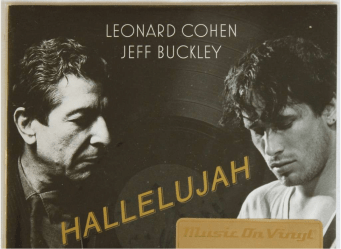
Buckley and Cohen


[1] The Old Testament has a related, though less pagan, version of this theme when speaking of Bezalel and Oholiab as artists filled with the divine Ruach (Exod. 31).

[2] For more on this fascinating story, see Alan Light, The Holy or the Broken: Leonard Cohen, Jeff Buckley, and the Unlikely Ascent of “Hallelujah” (New York: Astria, 2012).

Black and Blue: Race and Violence in the wake of Alton Sterling, Philando Castile, and the Dallas Massacre

Black and Blue: Race and Violence in the wake of Alton Sterling, Philando Castile, and the Dallas Massacre

How do you say something without adding to the noise?

Is it possible?

Over the past week, I’ve wanted to offer something redemptive in the wake of Alton Sterling, Philando Castile, and the massacre in Dallas.

“Don’t be silent,” many said. Yet my fear is to be like those who have nothing to say, but say it anyway.

Noise pervades.

And nuance is another casualty of violence. It seems to die alongside the victims.

Here, though, are a few half-formed thoughts:

  1. I need to listen. 

As a rural white kid, I know little of what it means to be black in America. That very obvious admission is an important step. Nor do I have experience in law enforcement. Given that, it would be wise for me to do some careful listening. We need to do that. While social media is a great place for “sounding off,” I wonder how much listening happens there. And as a white guy, I especially need to listen to the black community.

So here’s my most important point: While I am on vacation now, when I do return I’d like to sit down for lunch with some of my black friends and acquaintances. I need to listen—face to face—and I am ashamed to say I haven’t done that more. I’d also like to do that with some cops I know. It’s clear that we have a problem in this country, and my sense is that no solution will come until we actually hear each other, beyond the comment boxes.

Yet listening is not synonymous with silence, so here are a few more thoughts:

  1. It should not be difficult to decry BOTH senseless violence by police and senseless violence against cops.

A few weeks ago, I happened to see (again) the video of the Rodney King beating. It remains shocking. Here was a guy lying facedown (not resisting) while being clubbed almost to death after a traffic stop. It goes on and on.

Perhaps most shocking is then the remembrance that the officers were in fact acquitted of all wrongdoing. Go back and watch the video if that doesn’t shock you.

To be blunt, that’s why members of the black community find it difficult to “trust the investigation” after these events. They’ve seen that movie already. Literally.

So here’s my question: Why is it difficult to condemn THAT (what happened to King and certain other recent incidents) while also saying that most cops are decent people doing a difficult, dangerous, and thankless job?

Surely we can do both.

To prosecute bad cops is not to impugn police as a whole. It is not to say, monolithically, that cops are bad.

In the same way, to affirm that “black lives matter” and to admit that there is still a racial disparity in our justice system need not be “anti-police.” It may actually be pro-police, because for every Rodney King or Philando Castile, life gets more dangerous for the good and decent cops I know. And I don’t want that.

This is important: To decry police misconduct is itself a step toward protecting good cops, like those in Dallas who shielded protesters from bullets. It is actually part of what it means to be pro-cop.

  1. If you have a problem with the phrase “Black Lives Matter,” don’t read the Sermon on the Mount.

Some of my white friends have joined the ranks of those decrying the BLM slogan with the response that “All lives matter.” This is true. But it is also an adventure in missing the point. As Lecrae pointed out recently, it’s like angrily telling someone with lung cancer that “hey man, breast cancer matters too!” (see here.)

And for Christians especially, it is important to note that Christ’s most famous sermon does not say: “Blessed is everybody.”

Instead, Jesus goes out of his way to single out a marginalized minority from within a broader whole. Does God love everyone? Yes. Does everyone matter? Yes again. But Jesus still says, “Blessed are the poor … Blessed are the persecuted … Blessed are the meek.”

Christ exclusively and intentionally focuses upon smaller subsets of disenfranchised individuals inside a larger (blessed) populace.

I wonder how the ALM respondents would respond to Jesus’ sermon.

Would they tweet the following?

Actually Jesus, the rich and safe are blessed as well. Read Deuteronomy.

#AllLivesBlessed  #DivisiveRabbi 

One need not affirm every statement of the BLM organization in order to affirm that “Black Lives Matter.” (All organizations are mixed bags, including the police.) And to rigidly insist on “all lives matter,” in response to “black lives matter” is to display either ignorance or antipathy toward Jesus’ very way of preaching. 

  1. Violence is a feedback loop; only love can stop it.

Retributive violence is a feedback loop; it always grows and spreads.

Violence begets violence, begets violence, begets violence.

After the terrible massacre in Dallas, it became more difficult to deal with the lingering racial disparity in our criminal justice system. That retributive act (by a lone gunman) didn’t right the injustices done to Castile or Sterling. What it did was make the black community, and all of us, less safe. (My black friends know that.)

Because retributive violence almost always does this.

Thus again, the Sermon on the Mount:

“Blessed are the peacemakers” (Mt. 5.9).

CONCLUSIONS

In the end, there is no tidy solution to the racial divide within this country.

Reconciliation takes time and face to face relationships: barbecues, prayer meetings, hugs and handshakes.

And without question, the solution will come over dinner tables more than in the pixeled battlefield of cyberspace where all are bold and brilliant.

Remember that if you comment on this post. I’ll do likewise.


In Your Anger, Do Not Sin

In Your Anger, Do Not Sin

Question: How many of your best decisions have emerged from a fit of seething rage?

Last week, as I watched interviews with disgruntled BREXIT voters, a common theme emerged. Several had voted “Leave” as a way of expressing the anger of being left behind by their economy. They were upset, and perhaps for some good reasons.

Yet as the pound plummeted, markets dived, and the (potential) implications of the vote set in, some on the “winning” side expressed regret:

“It was simply a protest vote. I was angry. I felt like no one was listening, and I wanted to voice my frustration. I wish we could have a do-over.”

Comedians had a field day.

Despite the humor, this also brings up a serious point: Anger can be both warranted and dangerous. When we’re angry, we don’t think clearly. We throw off cost-benefit analysis, and sometimes, it comes back to bite us.

Thus the ancient words of Paul:

“In your anger, do not sin” (Eph. 4.26).

Or to paraphrase: “In your anger, don’t be stupid.”

WHY ANGER IS NEEDED

It is important, however, to note what Paul does not say. His command is not “Don’t be angry.”

Anger can be righteous and redemptive. Jesus got angry. And if things like hunger, racism, and gross incompetence don’t raise your ire, then there is something wrong with you.

When guided by the Spirit, anger can be the spark that lights the fuse of righteous action. Yet a controlled demolition of unjust structures is what’s needed, not a random bombing of anything in the vicinity. Anger (like TNT) is capable of both.

WHY ANGER IS NOT A VIRTUE

While anger jolts us out of apathy, it is not a virtue. If seen as one, then we end up assuming (wrongly) that the shrillest voice is that of wisdom. It is not.

Several commentators saw this phenomenon behind the rise of Donald Trump. While other candidates said: “I understand your anger,” Trump yelled “I am the angriest!” and then set out to show IN ALL CAPPS that he was the most fiery option on menu—a habanero amongst bell peppers; a boy amongst men. It worked. For awhile.

But few people enjoy an exclusive diet of habaneros for breakfast, lunch, and dinner. There are—how shall we put it—digestive repercussions. And the same is true with anger.

MY ANGER ISSUES

I wish I were immune from this.

I’m not.

This is “moving week” for us, which has involved one-hundred degree temps, inspectors who can find safety violations in a bar of soap, a moving company that suddenly does not have the truck we “reserved” (word used loosely), a scheduling mistake by PSO that delayed necessary repairs, and an electrician who turned out not to be licensed, leaving us with an expensive job that the city would not approve. Add to this three small children, a funeral message, a Sunday sermon, and (oh yeah) actually moving, and it was a volatile cocktail.[1]

All this came to a head as I worked to remove belongings from an attic that made Dante’s Inferno seem like a crisp fall day. “Why do we even have this [stuff]!?” I fumed. And instead of carrying said belongings down the stairs, I began to launch them through the attic opening as if I were manning the bomb bay in an old-time Flying Fortress. To complete the metaphor, several exploded.

It felt really good. Until I had to clean it up.

Sic semper ira.

Thus always with anger.

CONCLUSION


In sum, this post is simply a reiteration of the apostle Paul, said mostly to myself.

“In your anger, do not sin.” Also:

Realize that some things are not worth getting angry about.

Take a deep breath.

Don’t take things out on innocent bystanders.

And in your anger, don’t make a mess that takes far longer to cleanup than the one you were angry about in the first place.

Now, off to move more boxes…


[1] In truth, all these problems eventually worked out better than I could have hoped for. But in the moment, things were frustrating.

Does the Prodigal Son Discredit Penal Substitution? (Part 1 of 2)

For the past year or so, I’ve been working on a book on the atonement. And since that’s where my research has been, I thought that Holy Week would be a good time to start an ongoing series on the subject. Toward that end, this first installment (part 1 of 2) involves a parable and penal substitution.

Without question, the parable of the prodigal son, or the two sons (Luke 15), is one of the most compelling stories in the Bible.

Öèôðîâàÿ ðåïðîäóêöèÿ íàõîäèòñÿ â èíòåðíåò-ìóçåå Gallerix.ru
The Return of the Prodigal Son by Pompeo Batoni

It is the gospel itself. And even leaving aside questions of meaning and application, the arrangement of the narrative is simply brilliant.

This is true right down to the open-ended final scene. Here, the screen fades to black just as the father invites the elder brother to join the party, and the hearers are left wondering which path he’ll choose: the way of nature, or the way of grace (Cue that beautiful scene from the movie “Tree of Life”). The question is made all the more pointed when we realize that Jesus is telling the story to a room that is literally divided between the elder and younger brothers (Pharisees and tax collectors). For this reason, it was likely a rather tense transition to whatever came next that day.

So here’s what may seem like a strange question: Does this parable really discredit the idea that our forgiveness hinges upon Christ bearing the divine penalty for human sin?

Since the query may seem unrelated to Jesus’ story, I begin with some context.

The above understanding of the cross—in which Jesus freely takes the punishment that we deserved—is often referred to as penal substitution.

Amongst modern evangelicals, it is arguably the most common model of atonement, and it is also highly controversial. As stated above, it centers on the idea that Jesus suffered a divinely sanctioned penalty (whether damnation, divine wrath, god-forsakenness, etc.) “in our place,” and “instead of us.” For this reason, God’s justice is seen to be maintained in that he punishes sin, even while divine mercy is displayed in that God forgives repentant sinners.

As one might expect, there is a mountain of scholarly literature surrounding penal substitution. Whole rives of ink have been spilled and entire forests slain.

Thankfully, almost none of that concerns us here.

For now, the only question I am interested in is the one above: Does the story of prodigal son discredit penal substitution?

Interestingly, several scholars think so.

Take, for instance, the Oxford theologian, Paul Fiddes.

As Fiddes argues, penal substitution wrongfully places a law of necessary punishment above the character of God. In so doing, it wrongfully claims that God could not forgive apart from Christ bearing our punishment. Fiddes, rejects this notion, and he finds support for this rejection in the story of prodigal son.

In the parable, the father freely forgives his repentant son without the need to punish anyone. This, after all, is what forgiveness is. And if this is how it works with the father in the story, then why not with our heavenly Father? Why must Christ be punished in order for God to forgive his wayward children? Clearly the parable does not depict forgiveness like this.[1]

In recent years, evangelical scholars like Mark Baker and Joel Green have made similar statements about the implications of the parable.[2]

To add some color to such claims, Robin Collins even offers a creative reworking of the story to show how it might have gone if the presuppositions of penal substitution were in place.

Think of this as a an alternative history, Reformation re-mix:

Here, the father “cannot simply forgive” the returning son, for “it would be against the moral order of the entire universe.” As he states:

“Such is the severity of my justice that reconciliation will not be made unless the penalty is utterly paid. My wrath—my avenging justice—must be placated.”

In a twist, the elder brother then speaks up, as the Christ figure, with an offer to endure the father’s wrath on behalf of his guilty sibling (as you can see, this brother is quite different from the one in Jesus’ story). As he states:

Father, I will pay the debt that he owes and endure your just punishment for him. Let me work extra in the field on his behalf and thereby placate your wrath.” … And finally, when the elder brother died of exhaustion, the father’s wrath was placated against his younger son and they lived happily for the remainder of their days.[3]

The retelling is ingenious, but does it really show that the actual parable invalidates belief in penal substitution?
While this post (part 1) has merely sought to introduce the charge, the next one (part 2) will provide my own thoughts on this question.

In the meantime, I’m interested in your thoughts. What say you?


———–

[1] Paul Fiddes, Past Event and Present Salvation: The Christian Idea of Atonement (Louisville, KY: Westminster John Knox, 1989), 101–103 esp.

[2] Mark Baker and Joel Green, Recovering the Scandal of the Cross: Atonement in the New Testament and Contemporary Contexts, 2nd ed. (Downers Grove, IL: IVP Academic, 2011), 174.

[3] Robin Collins, “Understanding Atonement: A New and Orthodox Theory,” http://home.messiah.edu/~rcollins/Philosophical%20Theology/Atonement/AT7.HTM (accessed Mar. 16, 2016).