“This is my body, commodified and mass-produced for you”: On Communion and Campbell’s Soup

“This is my body, commodified and mass-produced for you”: On Communion and Campbell’s Soup

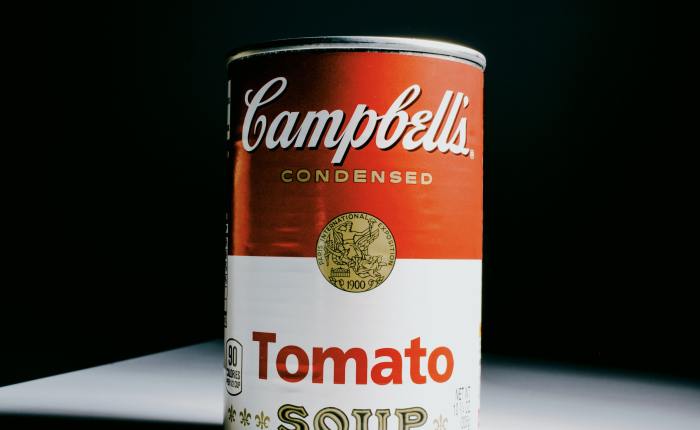
When Andy Warhol unveiled his Campbell’s Soup Cans art exhibit in 1962, reactions were closer to befuddlement than praise.

Was this art? Where was the beauty, drama, grandeur, sacredness, or seduction that had previously marked great paintings? And who would pay the exorbitant sticker price of $100 for something that could be purchased at the grocery for ten cents?
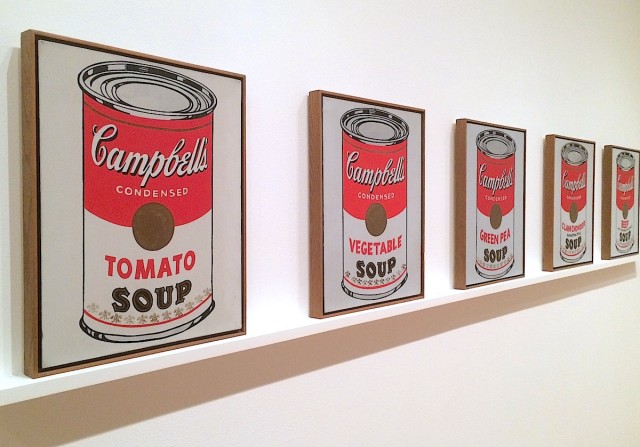
Of course, Warhol’s cans now fetch massive sums. One reason was that they offered an ironic critique of modern life. For good and ill, we are now drowning in cheap, mass-produced, pre-packaged, disposable, easily accessible, low quality but quickly replaceable “stuff.” (I originally opted for a different word to end that sentence.)

It’s Campbell’s soup—brought to us by Chinese sweatshops and two-day shipping.

I’ve thought about those Warhol paintings several times of late as I have received Holy Communion.

Out of noble health concerns starting with the COVID-19 pandemic, many churches moved away from traditional Communion methods in favor of individually packaged, disposable, mass-produced, plastic “blister packs” (actual description) like the one seen here.

I agreed with this move and gave thanks for it.

The tiny packages encase a single crumb of bread on one side, and—when you flip them over to remove another “blister” coating—approximately the same amount of liquid as contained within a single teardrop.

In evangelical congregations, I am used to Communion being spoken of as a mere symbol that helps us remember Christ’s sacrifice. “It’s not about the elements,” the pastor may be heard to say. So instead of the Gospel line, “This is my body”—many a minister feels compelled to amend the text to avoid misunderstanding: “This bread represents my body,” etc., etc. “This wine—I mean grape juice…—represents my blood.” I’ve grown accustomed to these things. And truth be told, I am not a believer in something like Catholic transubstantiation.

But I’ve also tired of Communion “blister packs.”

Despite understandable concerns for germs (with which I sympathize), I’ve begun to wonder what the “Oscar Mayer lunchable” approach to the Eucharist says about the modern church—not just on the Lord’s Supper, but on how we value symbols, sacraments, and physicality.

At the risk of overreaction, it sometimes feels as if we have set out to take the most beautiful and sensory-laden sacrament and turn it into something that has the aesthetic value of a roll of bubble wrap.

Even if it doesn’t burst like a juice box in my kid’s backpack, one looks around the sanctuary to see some churchgoers struggling with their teeth and fingernails—like racoons trying to unlock iPhones. By the end of the process, the elements usually find their way into digestive tracts—but something is lost from the meal that Jesus gave us. It has been commodified, sanitized, mass-produced, and individually packaged—like much of modern life.

What, then, is the solution?

My goal is not to add one more curmudgeonly complaint to the endless pile that pastors face. (It has not been easy to lead anything these past few years.) Nor is it to shame one or two churches to switch back to more traditional Communion practices. That too might be a malady of modern ecclesiology: (1) Someone complained. (2) So we stopped.

Instead, what we need is a more holistic way of noticing how unexamined modern values of convenience and commodification have caused us to do strange things in the realm of the sacred.

The French philosopher and theologian, Jacques Ellul, is helpful here. Ellul’s most important work, published back in 1964, is called The Technological Society. He sets forth two key concepts for diagnosing the side-effects that come with mind-blowing technology, inexpensive factory production, frazzled busyness, and consumer competition. He calls them (1) technique and (2) efficiency.

For Ellul, technique is “the totality of methods rationally arrived at and having absolute efficiency in every field of human activity.” Technique aids efficiency; and as we know, being more efficient can save time and money.

To be fair, we can all name aspects of our businesses and bureaucracies that badly need to be streamlined. The trouble, Ellul argues, is that the values of technique and efficiency easily move out of their rightful domains, and they begin to corrupt and commodify the way we relate to people, food, art—and God.

How do you find a mate? Swipe right.
How do I form a nuanced view of Shakespeare’s Othello? ChatGPT.
How do I eat, given that I’m frazzled and rushed? McDonalds.
How do I check “Communion” off my to-do list? Blister packs.

In all these areas, there are costs to maximally efficient solutions.

Moving back to Communion, note how our modern ways of approaching the Eucharist make it difficult to “feel” and “see” what Paul alludes to when he writes to the Corinthians:

“Is not the cup of thanksgiving for which we give thanks a participation in the blood of Christ? And is not the bread that we break a participation in the body of Christ? Because there is one loaf, we, who are many, are one body, for we all share the one loaf.”

1 Corinthians 10:16-17

In the end, I remain grateful for a necessary safety measure in a time of emergency. What’s more, we should probably keep some “blister packs” on hand to love and serve our brothers and sisters who have health concerns.

And as usual, my attempts to be pointed or humorous run the risk of oversimplifying—and overreacting. That too is a byproduct of the marriage of technology and efficiency: What are blog posts if not a maximally efficient form of publishing.

Enjoy your soup. I slaved for minutes over it.


Click the green “Follow” button to never miss a post.

See here to purchase a copy of Perhaps: Reclaiming the Space between Doubt and Dogmatism.

Signup here to receive bonus content through my email Newsletter, “Serpents and Doves.”

WWJV?

WWJV?

WHO WOULD JESUS VACCINATE FIRST?

As the first precious drops of the COVID-19 vaccine roll out across America, a pressing question swirled in prior weeks: Who gets them first?

In my state, as in most others, the majority of those doses will go to extremely vulnerable residents in nursing homes and long-term care facilities. (Though front-line workers will deservedly get some too.)

After all, nursing home residents are amongst those most likely to die from COVID-19. So we might be tempted to think that putting them first is nothing more than a common sense deduction that any civilization would make.

It is not.

And we should take a moment to recognize that fact—and then give thanks.

CRATERS ON THE MOON

Canadian philosopher Charles Taylor describes the lingering influence of Christianity on Western culture like craters on the moon.

What he means is that the impact marks of the gospel are still visible, even if the theological beliefs which formed them are no longer so widely held. We are seeing one of those “impact marks” now in the decision to give our first doses of the COVID-19 vaccine to people who may have little time left to live, even without it.

After all, one study showed that the average length of stay in a nursing home before death was about five months (here). Other studies differed slightly (here).

But by any tally, it’s not long.

So is our distribution plan “correct” by a purely utilitarian metric?

THE COUNTER-ARGUMENT

I listened recently to the Yale scientist, Nicholas Christakis, as he explained why giving our limited supply of COVID-19 vaccinations to those in nursing homes might NOT be the best approach.

He suggested that it could be better to distribute the vaccine “upstream” amongst citizens who are more likely to spread the virus, and thereby yield an exponential case-load reduction.

I have no epidemiological opinion on which approach is best; and even if I did, you shouldn’t listen to it (because getting your science and medical “takes” from unqualified people on the Internet is like calling a plumber for an appendectomy).

My point is NOT to say who SHOULD get the vaccine first, from a medical standpoint.

My argument is that our culture’s default assumption that “The last should go first” is influenced by theological factors that go beyond utilitarian ethics, economics, or default human behavior across millennia.

And I give thanks for that.

A HISTORIAN WEIGHS IN

Historian Tom Holland argues that one of the most enduring marks of Christianity has been the elevation of individuals who would have previously been seen as “less than” or disposable.

As an atheist himself, Holland does not believe the theological claims of Scripture, yet he admits that Christianity is the biggest reason “why we [in Western culture] assume every human life to be of equal value.”

When studying the ancient Greeks or Romans, he notes:

It was not just the extremes of callousness that unsettled me, but the complete lack of any sense that the poor or the weak might have the slightest intrinsic value.

Why did I find this disturbing?

Because, in my morals and ethics, I was not a Spartan or a Roman at all. That my belief in God had faded over the course of my teenage years did not mean that I had ceased to be Christian [in those assumptions].

Tom Holland, Dominion, 16-17.

Of course, both Christians and secularists have often been terrible in consistently applying this ethic.

To choose just two examples: On one extreme sits a naked refusal by some to recognize the full humanity of brown-skinned kids in cages at the southern border. And on the other rests a stubborn inability to condemn the killing of unborn babies in the womb. Hypocrisy abounds.

Nonetheless… the assumption (at least in theory) about the intrinsic value of the vulnerable has seeped into the cultural groundwater.

And at the end of that long historical trajectory sits someone like Margaret Keenan—the 91-year-old British woman who was the first person in the UK to receive the COVID-19 vaccination.

CONCLUSION

What was the reaction to the choice of Margaret Keenan, and others like her?

Not a single person I heard said, “Why save her? She’s going to die soon anyway.” Not a single person said, “Give the first doses to the powerful, the top-earners, and the ‘old-but-not-THAT-olds’.”

To be clear, I have no doubt that there will be inequities in vaccine distribution, especially in underdeveloped countries and underserved communities. But the very fact that we have chosen (in theory) to prioritize those who, by worldly standards, can contribute least to our economic and materialistic future shows a small glimmer of grace in a dark year.

That grace comes, as René Girard noted, from a Light that “has revealed so many things for so long a time without revealing itself that we are convinced it comes from within us.”

It’s a ray of sunlight on the craters of the moon.


Click the green “Follow” button to never miss a post.

Want to support this blog? Here are some other things I’ve written:

Signup here to receive bonus content through my email Newsletter, “Serpents and Doves.”

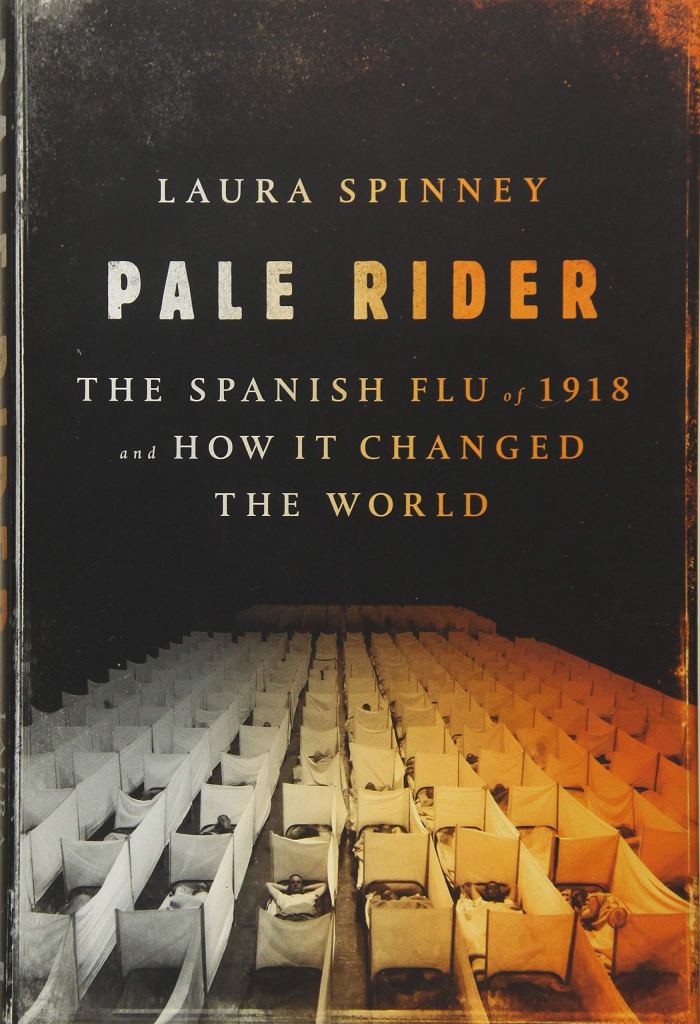
Pale Rider

Pale Rider

“Wars and plagues are remembered differently.”

That’s one of the closing insights from Laura Spinney’s book, Pale Rider: The Spanish Flu of 1918 and How it Changed the World.

I read it recently to gain some perspective on COVID-19, and the upheaval that has accompanied it in 2020. (Quick note: Since Spinney’s book was published in 2017, it cannot be accused of rewriting history to provide commentary on our present crisis.)

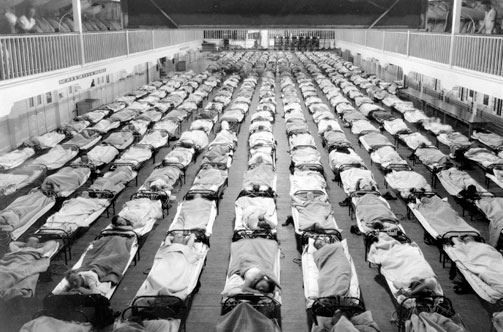
Without a doubt, the two outbreaks—separated by a hundred years—are different. The Spanish Flu killed between 50 and 100 million people. And its occurrence on the heels of World War I made it a perfect storm of death and dissolution. In some cases, the flu finished off victims who were malnourished, riddled with tuberculosis, and without what we think of now as modern medicine.

The Spanish Flu also had a terrible “W-shaped” mortality curve, whereby it killed not only the very old and very young, but also a startling number of healthy young adults (28 years old was the peak of this curve, which may have something to do with the first flu virus these individuals were exposed to as children).

Undoubtedly, the two pandemics are not the same.

But there is something to be learned from the way history sometimes rhymes.

  1. Pandemics are social phenomena as much as medical ones

What Spinney means by this point is that the tumult caused by a plague goes far beyond the disease itself. Our ideologies show symptoms too.

And conspiracy theories spread as fast as the virus (see here).

In 1918, the Plandemic brain-worm took the form of a rumor that the Spanish Flu was manufactured by the German drug company Bayer—and distributed to Allied nations by way of aspirin packets.

In Washington D.C., newspapers printed the claim of Lieutenant Philip S. Dane, head of health and sanitation, when he asserted that the Germans had deliberately sown the flu in America to defeat us.

This was false, in part, because the leading theory now is that the Spanish Flu started near Fort Riley, Kansas. Patient zero was a corn-fed farm kid named Albert Gitchell who may have contracted the pestilence when it jumped from a duck, to a pig, to a human.

a God-fearing boy who had grown up on a farm and known no other life, unwittingly carried the virus into the American war machine, whence it was exported to the rest of the world (164).

  1. Masks and kids and empty stadiums

Like today, there was some controversy over use of masks in 1918.

In select cities, mask use probably cut the death toll in half. But the mayor of San Francisco faced a PR nightmare in 1918 when he was caught on camera with his mask dangling from one ear while watching an Armistice parade.

Some Christian ministers, like Father Bandeaux of New Orleans, protested the closing of churches in 1918. And in one case, packed worship services were held wherein dozens of parishioners were invited to come forward and kiss a single holy relic—the kiss of death, in some cases.

Footballers played to empty stadiums. And there was a bitter debate over whether children should return to school. New York’s health commissioner, Royal S. Copeland, was lambasted for allowing public education to continue, only to be vindicated when the flu was practically absent from the city’s school-age children that fall.

  1. Presidents, the poor, and pieces of a lung

In an echo of 2020, President Woodrow Wilson came down with a severe case of the flu while negotiating what became the treaty of Versailles. He raved with delirium and was, by some accounts, never the same after surviving it.

The president’s illness may have contributed to the disastrously harsh nature of the treaty. Apparently, Wilson’s sickness rendered him unable to fight for a more merciful arrangement (which he wanted), and which might have prevented the bitter rise of Hitler and the Third Reich.

Like in 2020, the poor were hit hardest. The death rate was lowest in developed countries like the United States and Australia. It was worst amongst populations that lacked proper sanitation, housing, water, and healthy food supplies.

In India alone, around 15 million people died.

Ninety percent of folks who got the Spanish flu experienced nothing worse than a bout of seasonal influenza—but in poor regions, and especially amongst indigenous populations like the Inuit of Alaska, the result was much worse. Entire villages were wiped out.

In one of these Alaskan mass graves, a San Francisco doctor embarked, in the 1990s, upon a controversial mission. He exhumed a body of a flu victim from the permafrost, packaged up her mostly frozen lung tissue, and shipped it off to researchers. Scientists then combined its genetic information with a lung sample from British soldier to resurrect the Spanish Flu.

After almost a century of lying frozen and dormant, the Spanish Flu is now alive and well in the CDC’s Level Four lab in Atlanta, Georgia.

CONCLUSION

What is the point of reading histories like Spinney’s Pale Rider?

One benefit is perspective. In the age of social media and Cable News myopia, we are beset by “presentism”—that’s Alan Jacobs’ word for what it means to drown in a deluge of constantly breaking information. Because there is SO MUCH information, many people commit an act of intellectual triage whereby we accept only those stories that confirm our pre-existing biases.

We are thus left in our silos of tribalism, anxiety, and the prison of the present tense.

History can’t solve all those problems, but it can grant perspective.

Wars and plagues are remembered differently.

So while six times as many Britons died of the Spanish Flu than in the trenches—we are only now beginning to read books like Pale Rider.


Click the green “Follow” button to never miss a post.

Want to support this blog? Here are some other things I’ve written:

Signup here to receive bonus content through my email Newsletter, “Serpents and Doves.”

Quiet heroes

Quiet heroes

A tragedy in our age of spectacle is that we often make morons famous while courageous people labor in quiet fidelity.

“Quiet” is the key word there.

And Good Friday reminds us it’s not new.

The Roman historian and politician Tacitus (c. 56–120 AD) famously remarked that

“Under Tiberius, all was quiet” (Hist. 5:9).

There were apparently no Messianic news stories during those years that demanded the intervention of the Roman legions in Palestine. Hence, as far as Tacitus was concerned, little happened.

But of course, something happened under Tiberius: Jesus lived, died, and rose again.

And a later historian (and atheist) Tom Holland claims that no event would have more impact on subsequent centuries than the “quiet” one that failed to appear on Tacitus’ Newsfeed.

Even in those days, the algorithms had other priorities.

Holland:

To believe that God had become man and suffered death of a slave was to believe that there might be strength in weakness, and victory in defeat.

HEROES

I’m reminded of that truth today (Good Friday) as I hear of my former students, both nurses, who are now headed into crowded, virus-laden hospitals—in New York and New Jersey.

One of them (Amanda) has blogged her experience beautifully (here).

And another (Jo-Nieca) has volunteered to leave her young family in Oklahoma and serve in an overrun New Jersey hospital.

Pray for them when you think about it. And pray for other quiet heroes placing themselves in traumatic situations for the good of others.

“Good” is the key word there, on a day (Good Friday) that redefines that concept too.


Click the green “Follow” button to never miss a post.

Want to support this blog? Here are some other things I’ve written:

Signup here to receive bonus content through my email Newsletter, “Serpents and Doves.”
Quarantined on Easter Weekend

Quarantined on Easter Weekend

Thanks to The Wesleyan Church for publishing a new piece I wrote for Easter weekend.

It’s about the strangest (and perhaps most relevant) example of “physical distancing” in the whole New Testament.

You can read it here.

In addition to “going” and “showing, part of the Christian vocation is to engage in holy quarantine. We wait alive in Death’s shattered house. “Walled in” but not defeated.


Click the green “Follow” button to never miss a post.

Want to support this blog? Here are some other things I’ve written:

Signup here to receive bonus content through my email Newsletter, “Serpents and Doves.”
Christendom, the coughing ghost

Christendom, the coughing ghost

“Christendom,” says Mark Sayers, “is like Hamlet’s ghost; it may be dead, but it still acts in the play.”

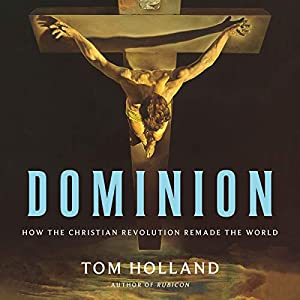
That line could form a summary of the book I’m reading during this time of global tumult: Dominion, by the British historian Tom Holland.

Dominion

The subtitle is “How the Christian Revolution Remade the World.” And the work represents a shift from Holland’s early scholarship. Having written histories of Julius Caesar (Rubicon) and the Persian empire (Persian Fire), Holland once claimed a fairly negative view of Christianity.

He remains an atheist.

But he eventually arrived at an unsettling conclusion: The values he held most deeply were the product of a faith he could not hold. To quote Sayers again, the secular project is itself an attempt to have the Kingdom (values, or at least some of them) without the King.

Dominion is Holland’s long attempt to trace how that happened.

The dust jacket tells the thesis:

Christianity is the principal reason why, today, we think it nobler to suffer than to inflict suffering; why we assume every human life to be of equal value.

From Babylon to the Beatles, Moses to #MeToo, Dominion tells the story of how Christianity transformed the world.

GHOSTS ON VENTILATORS

Meanwhile, down in Texas…

Lt. Governor Dan Patrick stuck his cowboy boots in his mouth last week when he seemed to suggest that America should value the economy over the potential death-toll on the elderly by COVID-19.

“Let’s get back to work,” Patrick proclaimed, “let’s get back to living. Let’s be smart about it, and those of us who are 70 plus, we’ll take care of ourselves. But don’t sacrifice the country.”

After a media firestorm, Patrick sought to “clarify” his comments by adding the “at some point” qualifier–a move that is about as bold and specific as suggesting that “at some point” we should restock our national supply of toilet paper.

It’s easy to make political hay of such soundbites. I’ll let others do that.

My goal is merely to relate Patrick’s original faux pas, and the related ones of many others, to Holland’s Dominion.

ECONOMIC PAGANISM

Holland’s claim is that we now call callous and barbaric viewpoints are actually the more common ones in world history: a lack of concern for the weak, the sick, the poor, the old, and those with disabilities.

The very need for the Lt. Governor to “clarify” his comment signals something strange in world history.

Holland writes this of the ancient Greeks and Romans:

It was not just the extremes of callousness that unsettled me, but the complete lack of any sense that the poor or the weak might have the slightest intrinsic value.

Why did I find this disturbing?

Because, in my morals and ethics, I was not a Spartan or a Roman at all. That my belief in God had faded over the course of my teenage years did not mean that I had ceased to be Christian [in terms of ethics].

Of course, Holland is focusing on only one set of Christian values—an error that is common amongst both liberals and conservatives. Yet the atheist historian and the Lt. Governor bring us to a final, unsettling question:

What if the ghost of Christendom is getting “sick”—not just in the secular cities of New York, London, and Los Angeles, but in the Bible belt as well?

“Christendom” is not the same as “Christianity.” The former has more to do with cultural power and privilege. The latter is about worship, service, and mission.

Still, the former is not unimportant–and especially for the way our culture treats the least of these (the elderly, the poor, the unborn).

This is what it sounds like when Hamlet’s aging ghost begins to cough.


Click the green “Follow” button to never miss a post.

Want to support this blog? Here are some other things I’ve written:

Signup here to receive bonus content through my email Newsletter, “Serpents and Doves.”