
I’ve been on the family farm the past few days, with my wife’s folks in central Kansas. On Tuesday, we woke before dawn to watch a nearby “little house” of lesser prairie chickens (that’s what they’re called, apparently) do their colorful springtime dance, which takes place in the same plot of ground each year.
The kids have been riding dirt bikes, checking baby calves with grandpa, and playing in their palatial tree house. I’ve been cutting firewood and generally enjoying some outdoor time away from the indoor office since it’s Spring Break at the university.
Considering all that, I was struck by these lines that I read yesterday from the Belgic Confession of 1561. (I always save my 16th century Calvinists confessions for Spring Break; or as I call it, Presbyterians Gone Wild.)
In a lovely passage, the confession celebrates that we know God not only by Scripture but also
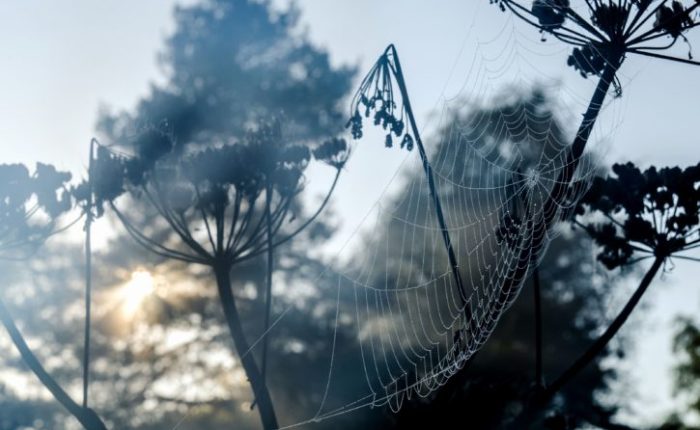
“. . . by the creation, preservation, and government of the universe, since that universe is before our eyes like a beautiful book, in which all creatures, great and small, are like letters to make us ponder the invisible things of God . . .”
The chief author of the statement was Guido de Bres, who was later martyred for his faith. The language of the “two books” (nature and Scripture) is familiar to many Christians. Yet I was struck less by what the Confession affirms than by how it illustrates it.
Creation is God’s beautiful book.
And all creatures, great and small, are like letters that pour forth from his pen.
In the 16th century, with the invention of the printing press not long ago in recent memory, the accessibility of books was skyrocketing. Thus, the confession locates us in a world that is no longer ancient or medieval; yet not quite modern, mechanized, and disenchanted. In that space between antiquity and the modernity (papyri and iPhones) sits the book—now in our own day increasingly a dusty museum relic in the age of Tik toc, Tinder, and attention spans approaching the breadth of a sneeze, even as anxiety tracks in the opposite direction (see here).
To liken creation to a book is, in a roundabout way, to venerate the act of writing, and the need for careful reading. The Reformers knew this more than most. Their movement would have floundered without Gutenberg’s invention. And they had seen their favorite texts—including the New Testament—banned in common tongue. In the end, their message depended partly on a public that could comprehend (and would want to comprehend) the written works that folks like Luther, Calvin, and Arminius were churning out with a rapidity to make even a chat bot green with envy.
In the analogy of the Belgic Confession, books matter—as does God’s creation.
Yet it is not just any book to which the world is likened by de Bres. After all, a text may be accurate, informative, useful, or just plain dull. Yet the confession calls creation God’s “beautiful book.” To be fair, this beauty is more apparent in some instances than others. (I wrote a whole chapter in Perhaps on Darwin’s haunting question on what he called “the suffering of millions of lower creatures,” and how he came to think that formed an argument against an all-loving and all-powerful creator. I beg to differ. But one can’t deny the force of Darwin’s “reading.”)
Yet amidst the dancing house of prairie chickens, and the smell of storm-felled and time-seasoned elm, one has a sense that Guido de Bres got that part exactly right, even if Hopkins said it more poetically.
“And for all this, nature is never spent;
There lives the dearest freshness deep down things;
And though the last lights off the black West went
Oh, morning, at the brown brink eastward, springs—
Because the Holy Ghost over the bent
World broods with warm breast and with ah! bright wings.”
Click the green “Follow” button to never miss a post.
And see here for my own books.

 joshuamcnall.com