
Reading is Rereading

Reading is Rereading

After my sermon last Sunday, a friend asked, “How many books do you read per week?”

Surprisingly, the answer is usually “less than one.” To be sure, I read daily: Scripture and academic works in the morning; and something outside my field at night—fiction, history, or biography. (I’m currently near the end of Simon Schama’s fantastic but entirely-too-long history of the French Revolution.)

Still, I suspect I read slower than most people.

My friend’s question emerged because I had referenced several books in the sermon (probably too many books, if I’m honest). These authors included A. J. Swoboda, Joshua Jipp, Will Guidara, Ingrid Faro, and Wendell Berry. And, you know, Luke’s Gospel.

I was able to draw on these books, not because I had read them last week. (Only one fell into that category, and I didn’t finish it.) Instead, I could retrieve them because of the way I read and annotate books. (And I do mean physical books—with pages, spines, and a total lack of pixels.)

I mark them up like a graffiti artist tagging a boxcar and I dog-ear pages with content I want to retrieve, usually with a one- or two-word annotation: “Blog post,” “Article,” “Micah 6:8 book,” “Sermon Illustration,” “Atonement doctrine,” “No!”

When it’s time to write a message, a lecture, or a book of my own, I’ll consider what previously-read works in my library might add something; then I’ll flip through the dog-eared pages quickly to see what fits. It might take 30 seconds per book.

The massive benefit, however, is that I’m able to retrieve things that I no longer remember.

Perhaps that habit can help you too.

Of course, some caveats apply:

  1. You can’t dog-ear every page. If you highlight each word, you might as well not do it. I aim for less than ten dog-ears per book (four or five is best), otherwise you’re just doing entry-level origami.
  2. Slow down. Reading is about growth, not “finishing.” Studies suggest slower readers—that is, those who read at the pace of speaking rather than the pace of word-recognition–retain and remember far better than others. Hear this: In a world of distracted digital rabbits, be the turtle.
  3. Read broadly. No one wants to listen to someone who only reads business books (welcome to the late 90s and early 2000s in many evangelical denominations), or sports, or academic tomes, or jingoistic histories, or partisan political opinions disguised as “a Christian worldview.” The best writers, preachers, and thinkers read broadly. After all, I can only speak to all of life if I read intentionally in ways that touch upon the diversity of human experience. Otherwise, we become like the old man on the Simpsons who proclaims loudly that he hates everything but Matlock and Metamucil.
  4. Man cannot live (or preach) on books alone. As much as I want to champion reading actual books over the brain-rot of cable news, TikTok, smartphones, and the temptation (even in academia…) to say “AI” over and over as if it’s a magic spell that substitutes for thought and work and expertise—the fact remains that we live increasingly in a post-literate age. Hence, I’ve been inspired by authors and preachers who can draw not only on books, but on other sources too. I recall several moving illustrations in Jake Meador’s recent work that came from the world of streaming television—since, let’s be real, his audience is more likely to recognize those illustrations than they are a reference to Charles Dickens. Thus, when Jesus preached, he told more stories about seeds than Stoic philosophers.

CONCLUSION

In the end, take this as an encouragement that slower readers can still be deeply formed by books—and then pass that blessing on to others. In fact, formation may be more substantial precisely because of its slowness. Likewise, one need not have a photographic memory to retrieve wisdom and beauty from texts that no longer occupy one’s short-term memory.

Reading is rereading.

And marking.

And dog-earing.

And pulling off the shelf when the time is right.

Hear then, the word of the Lord: Be the turtle. Make reading great again. Practice selective, recollective origami.


In fact, if you’re looking for some books to practice on, see here.


Hello friends, and thanks for reading. Please subscribe via the button on the home page to receive future posts by email. This is especially valuable to me since I’ve decided (mostly) to uncouple the blog from social media. I’m grateful for you. ~JM
Why I went back to school after finishing my PhD

After finally completing my PhD, I recently made the strange decision to do something that I thought I’d never do again–go back to “school.”

In January, I began auditing a college course in British Literature (Brit Lit. 2), with Dr. Sarah Petrovic. And I’ve enjoyed it immensely.

bm2
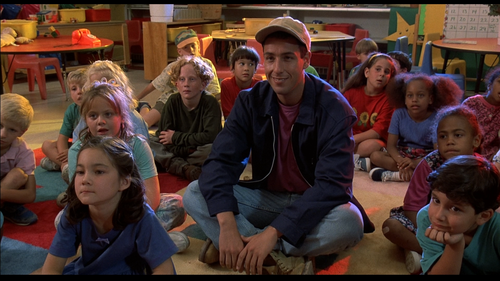
Actual picture of me in Brit.Lit. 2

When I told this to a fellow professor, he looked at me the way my dog does when I ask her if she’s seen my car keys.

“Huh?” [head cocked to the side]

And, to be honest, I get that. It’s unusual to take classes for no credit, and it’s even more unusual for a prof. to take an undergraduate course.

Still, the experience does allow me to make a couple points that are, I think, important.

Against Educational Prostitution

If education is viewed merely as something we must endure—perhaps with gritted teeth—in order to (one day) receive a paycheck, that’s closer to prostitution than a quest for wisdom.

It’s cheapened, no matter what the sticker price.

As Dennis Hayes argues, true learning need not be “for” anything:

If all the problems of economic and social life were solved and people did not even have to work, we would still seek knowledge. This is encapsulated in Socrates’ vision of eternal life as an endless series of conversations and debates with the greatest thinkers.

I would tweak this only slightly.

For Christians, seeking after the Beautiful, the True, and the Good is worship, whether through the mysteries of quantum mechanics, or the well worn sonnet psalms of Gerard Manley Hopkins (thanks Brit. Lit. 2!):

Glory be to God for dappled things –

[…]

All things counter, original, spare, strange;

Whatever is fickle, freckled (who knows how?

With swift, slow; sweet, sour; adazzle, dim;

He fathers-forth whose beauty is past change:

Praise him.

~Pied Beauty

As the Apostle Paul states: “all things are yours” (1 Cor. 3.21).

Which brings me to the next point:

For Lifelong Learning

There are lots of practical ways to be a lifelong learner. And these need not involve quitting your job to become a Portland barista with three masters’ degrees and a student loan debt greater than the GDP of Denmark.

Here are a few:

  1. Audit a Class

While my schedule permits this more easily than yours might, anyone can do it. Auditing a class—that is, attending the course, but not taking it for credit—costs next to nothing. You don’t have to worry about getting a good grade, and you get to learn from an expert  in a particular field. My advice would be to ask around about great teachers at a university near you, peruse the course catalogue, and then contact the registrar for info. It’s easy and inexpensive.

  1. Podcast like a Pro

I have a ten-minute drive to work each morning. That’s short. Yet even in brief spans like that (going home for lunch, back and forth from the gym), I can listen to a lot of podcasts. The key is to find the ones that stretch you. Some of my favorites are Radiolab and The Moth from NPR, Ask Science Mike for my deficient grasp of science, and preachers like Tim Keller and Matt Chandler. The podcast app on the iPhone (or Android) makes it easy. (Caveat: in a future post I’d like to talk about why I think it’s helpful to listen to and podcast people with whom you disagree. But not here.)

  1. Develop a Strategic Reading Plan

I could have simply bought the books for Brit. Lit. 2 and read them. But I wouldn’t have. I needed the accountability. A book club provides something similar. Still, if that’s not an option, then an strategic reading plan, incorporating different genres, is a great (though obvious) alternative. (Incidentally, if you’re a preacher, I highly recommend Cornelius Plantinga’s Reading for Preaching for some great insights on how to do this. While not all great readers are great preachers, all—and I mean all—great preachers are great readers.)

  1. Use Youtube (Selectively)

I have a friend with serious dyslexia, and this makes reading difficult. Still, he’s a lifelong learner, and he has found some ways around the difficulty. For him, Youtube resources like School of Life, TED talks, and the hilarious Crash Course series with John Green, offer alternatives to heavy reading. No, it’s not the same. And yes, there is a lot of nonsense in the Internet wasteland, but that’s true of bookstores and universities as well.

Conclusion  

In the end, my own decision to “go back to school”—without the hefty price tag—has been time well spent.

It has given me no opportunity for a pay raise, no credits toward a further degree, and no fast track toward career advancement.

And that’s okay. Because while such things aren’t bad, I think John Dewey was right to say that:

Education … is a process of living and not a preparation for future living.


NB: If you do not think that educating for wisdom is a dire need within our culture, please read my prior post on the rise of Donald Trump.