How Genius Happens: The untold story of Leonard Cohen’s “Hallelujah”

How Genius Happens: The untold story of Leonard Cohen’s “Hallelujah”

As Jeff Buckley quietly drowned in a Memphis tributary in 1997, he could not have known that this tragic accident would lead to immortality. If not for him, then for the mostly unknown song that he had covered: Leonard Cohen’s “Hallelujah.”

The song itself is almost universally recognized as a preeminent example of modern songwriting. Seemingly every artist has covered it (I shamelessly prefer the Rufus Wainwright version (here)).

Yet if Buckley hadn’t waded, fully clothed, into that slack water channel—wearing cowboy boots and singing Led Zeppelin’s “Whole Lotta Love”—you might not even know the song.

And that’s another tragedy.

TWO TYPES OF GENIUS

This is but one revelation in the latest installment of Malcolm Gladwell’s Revisionist History podcast. The episode is entitled “Hallelujah,” and it explores two ways that genius happens (download here).

The first form of genius is what we typically think of when we use the word. It can be seen in artists like Picasso, Melville, and Bob Dylan. These preternatural talents produce their masterpieces in quick bursts of confident and superhuman giftedness. Gladwell calls these Conceptual Innovators.

The second form of genius is what Gladwell calls Experimental Innovators. And these are very different. They spend years tinkering and dismantling their own work, never fully satisfied with it. Cezanne was like this. Many of his greatest paintings went unsigned, because he was not ready to admit that they were done. In other cases, he required a hundred sittings for a single portrait.

Leonard Cohen is like that.

THE BAFFLED KING COMPOSING

Cohen worked obsessively on Hallelujah for five years—FIVE YEARS—writing upwards of sixty verses. That’s insane. And if you’ve heard his “finished” version, you know—it’s terrible. It sounds like a Baptist choir got drunk and then sang background for a sad Neil Diamond. It’s offensive.

Ironically, the first person to take note of the song was Bob Dylan (who knows a thing or two about making terrible versions of his own music). Over lunch, Dylan asked Cohen how long it took to write it. Cohen lied and said two years. Then he asked Dylan how long it took to write one of his favorites (“I and I”). Dylan told the truth: about fifteen minutes.

Picasso, meet Cezanne. Cezanne, try not to choke him.

NOT A VICTORY MARCH

Then a series of unlikely events takes place. Here are the cliff-notes:

  • Cohen’s album and the song are rejected, because: sad Neil Diamond.
  • Cohen keeps tinkering… Now the choir is gone and the latest version sounds like he’s channeling a Jewish Barry White (here). It’s still awful.
  • Then, John Kale, of The Velvet Underground, hears the latest iteration. He likes it, and asks Cohen for the lyrics. Cohen faxes fifteen pages!
  • Kale then chooses three verses, mostly those with biblical imagery. He changes the entire feel of the song, and covers it. No one buys it.
  • No one, that is, except a woman named Janine, in Brooklyn—for whom Jeff Buckley cat-sits. That’s right: cat-sits.
  • Buckley performs the song at a dive bar. A record exec is there, and he immediately signs him.
  • Buckley’s 1994 version of Hallelujah is inspired. It is “the famous one.” But almost no one pays attention.
  • Then, in 1997, Buckley drowns in Memphis. And in the aftermath of tragedy, as often happens, people take notice.

From the swirling waters of the Mississippi, a daimon (Greek for “genius”) rises.

NO SECRET CHORD

So what’s the point?

For Gladwell, one lesson is that genius comes in more than just one form. There is Dylan, bleeding brilliance in the time it takes to nuke a hot pocket. But there is also Cohen (and Cezanne), for whom genius, to quote W.B. Yeats, “comes dropping slow,” and through endless edits and reiterations.

For these folks, there is no “secret chord” to please the ear upon first listen. Instead, there is a long slog. And in such cases, time is a key ingredient.

But that’s not the only lesson here.

I USED TO LIVE ALONE BEFORE I KNEW YOU

My takeaway involves how much help Cohen needed all along the way. In short, he needed to be rescued from his own conception of what the song should be.

To be sure, Cohen is a genius. And the brilliant words are his. But he was also terrible at separating the good bits from the bad. And he lacked an ear for how the song should sound. John Kale fixed that. Then Jeff Buckley brought his voice, his artistry, and his good looks. (Picture Jesus, but with better fashion sense.) Still, even this may not have been enough. In the end, it took a tragedy as well.

So, in the end, Cohen’s work needed not just TIME, but HELP as well.

And neither of those words are usually associated with “genius.”

We like to picture our geniuses like Dylan or Picasso. Solitary. Effortlessly churning brilliance at breakneck speed, as if tapped into a spiritual force beyond themselves.

Which is what “genius” meant originally.

For the ancients, it was not that someone WAS a genius (for life). Rather, it was that they HAD a genius (occasionally). In such rare moments, a spirit (daimon) inhabited them, and their work became transcendent.[1]

On this older definition, see this excellent TED Talk by Liz Gilbert (here).

But solitude and speed is NOT how “Hallelujah” happened.

And as someone who wrangles words for a living, that encourages me.

THE MAJOR LIFT

Personally, I take heart in knowing that even Leonard Cohen needed lots of TIME and lots of HELP to “make the mummies dance” in Hallelujah.

Even after years of work, this brilliant song was still sub-par.

But that was not the end.

Because writing is rewriting. Genius loves company. And good work takes time. Sometimes, it is a long and frustrating slog.

Yet in the Christian tradition especially, it is encouraging to know that even broken hallelujahs can be made beautiful.[2]
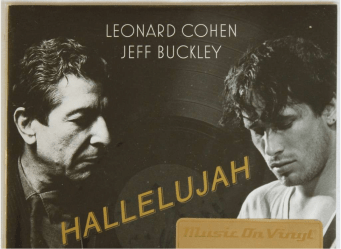
Buckley and Cohen


[1] The Old Testament has a related, though less pagan, version of this theme when speaking of Bezalel and Oholiab as artists filled with the divine Ruach (Exod. 31).

[2] For more on this fascinating story, see Alan Light, The Holy or the Broken: Leonard Cohen, Jeff Buckley, and the Unlikely Ascent of “Hallelujah” (New York: Astria, 2012).
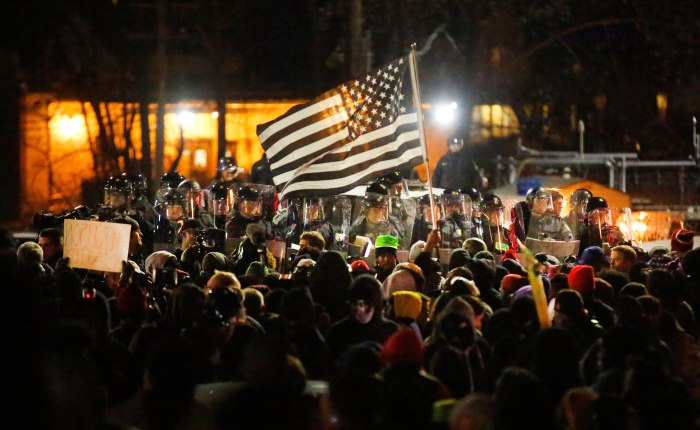
“I Don’t Know”–Charles Kinsey, and the danger of our unknown motives

“I Don’t Know”–Charles Kinsey, and the danger of our unknown motives

“Why did you shoot me?” was the question Charles Kinsey asked of the Miami police officer standing over him.

The answer he received surprised him: “I don’t know.”

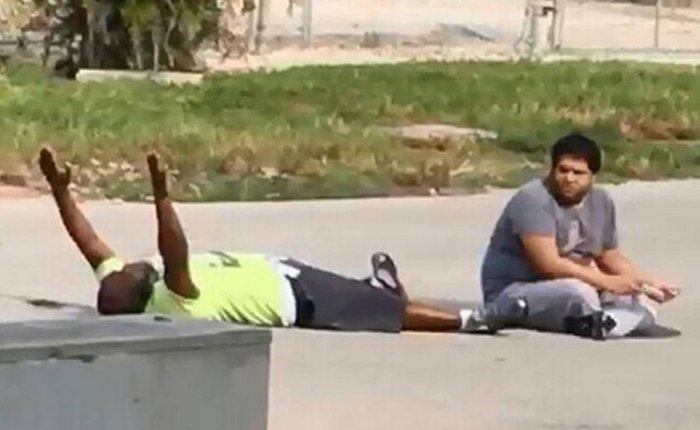
As you may know, Kinsey is a behavior therapist from Miami who works with autistic individuals. One of these, a young man, wandered away last week and sat down in the street. Kinsey attempted to retrieve him, and police arrived, called to the scene by someone reporting a man who looked suicidal, and who may have a gun.

Kinsey explained to police that this was not the case, but to no avail. At the time that police fired, he was lying on his back, empty hands in the air, explaining loudly that the young man sitting next to him was autistic, that he was playing with a toy truck, and that Kinsey was his therapist.

All of this is clearly seen and heard on video (see here).

Kinsey begs officers not to shoot. He pleads with his client to stay calm. He continues to explain the situation, and he does everything imaginable to demonstrate that he is not a threat.

Well, perhaps not everything. He does not cease to be a black man.

Reports later showed that the police officer who shot Kinsey fired not once, but three times. Then after Kinsey was shot, he was handcuffed and laid out on the pavement for twenty minutes while bleeding from the bullet wound. Thankfully, he survived.

Later, when pressed about the incident, the police union claimed that the officer had shot Kinsey by mistake, while aiming at the unarmed autistic man, who they believed to have a gun. (This, despite clear audio of Kinsey explaining that it was a toy truck, and despite the fact that police then handcuffed the wounded/unarmed man (Kinsey) whom they were reportedly trying to “rescue”).

“I DON’T KNOW”

Much more could and should be said about this incident. Yet, surprisingly, this is not a post on racism and police misconduct, at least not exclusively.  (See here for that.)

For the record, my assumption is that most cops (indeed, the vast majority) perform their thankless jobs with honor, and that they deserve far better than the blanket blame that often dogs them. As I’ve said before, acknowledging real cases of police misconduct, should be a way of protecting good cops whose reputations are sullied by the actions of a few, and who are subject to cowardly acts of retribution.

In looking at this case, however, I want to focus on something few have covered: the odd RESPONSE to Charles Kinsey’s simple question: “Why did you shoot me?” Answer: “I don’t know.”

While some may read this explanation cynically (he and his lawyers had not settled on a “reason” yet), or skeptically (perhaps it never happened), I want to explore another possibility: Perhaps this strange response was honest. And perhaps—as the officer initially implied—he was genuinely baffled as to why he fired three times on an unarmed and fully compliant Good Samaritan.

If this is so, then maybe it says something important about the murky motives behind even our snap decisions.

“WE KNOW NOT WHY WE DO”

My proposal is this: In many cases, and especially under stress, humans do not make decisions by weighing the actual evidence. Especially when fear and conflict are involved, we simply react, and we do so based on a mental and emotional database of subconscious intuitions and assumptions.

And, while this gut-reaction, fight or flight reflex, may be life-saving if there is a lion in the bushes, it can be deadly to men like Charles Kinsey.

In truth, this proposal is not new. As best I can tell, it is corroborated by both psychology and brain science.[1] Here, the data suggests that in many cases, our subconscious mind makes decisions for us, and we may not even be aware of the real motives behind them. In short, we see what we have been conditioned to see by a wide variety of prior forces and (yes)prejudices.

Someone reported a gun.

There is a black man.

Is he lying?

That young man is not responding.

X X X

“Why did you shoot me?”

“I don’t know.”

To be clear, this does not excuse the officer for shooting Charles Kinsey. He should be held responsible.

Yet it may mean that all of us should pay more attention to the what is being fed into our subconscious, for as one psychologist notes (here), “that is the information that our brain uses to make decisions, before we even realize [that] we’ve made [them].”

BIBLICAL SUPPORT

In it’s own way, Scripture also supports this line of thinking.

In the book of Acts, a mob forms near Paul and company in the city of Ephesus. Things get tense, people see what they want, and by the end, Luke tells us that

“Some were shouting one thing, some another. [And get this…] Most of the people did not even know WHY they were there” (Acts 19.32).

Did you catch that last line?

Elsewhere, Scripture claims that the heart of fallen man is desperately wicked (this much should be obvious), yet the verse finishes like this: “who can know it?” (Jer. 17.9)

Note that the question is not “who can tame the wicked heart?” but rather “who can KNOW it?”

Sin has noetic side effects (Rom. 1.18). Perception is affected. And sometimes, even our full motives are unknown to us.

As the philosopher Ludwig Wittgenstein wrote:

“Nothing is so difficult as not deceiving yourself.”

This explains why one thing most all racists have in common is the belief that they are not racists. “Not me.  I don’t burn crosses.”

REDEMPTION

What then is the solution?

In the gospel, transformation comes not through the revamping of behavior, but through the “renewal of the mind” (Rom. 12.1). Thus repentance (meta-noia) is literally a turning of the nous (or mind) of the believer, so that it is conformed to the image of Christ (Rom. 8.29).

In short, even our subconscious must be reprogrammed by God’s grace, and by the careful searching of the Spirit. This may happen slowly, but it must happen, not just for people like the officer who fired on Charles Kinsey, but for all of us.

All of us must become more aware of the hidden assumptions, preconceptions, and prejudices that guide our thinking.

Lest the risen Jesus look down on us—as he did from the cross—and intercede once more: “Father forgive them, they know not WHY they do.”


[1] See C. S. Soon, M. Brass, H.J. Heinze, & J.D. Haynes, “Unconscious Determinants Of Free Decisions In The Human Brain,” Nature Neuroscience, 11:5 (2008), 543–5; J.L. Voss & K.A. Paller, “An electrophysiological signature of unconscious recognition memory” Nature Neuroscience, 12 (2009), 349-355.

Black and Blue: Race and Violence in the wake of Alton Sterling, Philando Castile, and the Dallas Massacre

Black and Blue: Race and Violence in the wake of Alton Sterling, Philando Castile, and the Dallas Massacre

How do you say something without adding to the noise?

Is it possible?

Over the past week, I’ve wanted to offer something redemptive in the wake of Alton Sterling, Philando Castile, and the massacre in Dallas.

“Don’t be silent,” many said. Yet my fear is to be like those who have nothing to say, but say it anyway.

Noise pervades.

And nuance is another casualty of violence. It seems to die alongside the victims.

Here, though, are a few half-formed thoughts:

  1. I need to listen. 

As a rural white kid, I know little of what it means to be black in America. That very obvious admission is an important step. Nor do I have experience in law enforcement. Given that, it would be wise for me to do some careful listening. We need to do that. While social media is a great place for “sounding off,” I wonder how much listening happens there. And as a white guy, I especially need to listen to the black community.

So here’s my most important point: While I am on vacation now, when I do return I’d like to sit down for lunch with some of my black friends and acquaintances. I need to listen—face to face—and I am ashamed to say I haven’t done that more. I’d also like to do that with some cops I know. It’s clear that we have a problem in this country, and my sense is that no solution will come until we actually hear each other, beyond the comment boxes.

Yet listening is not synonymous with silence, so here are a few more thoughts:

  1. It should not be difficult to decry BOTH senseless violence by police and senseless violence against cops.

A few weeks ago, I happened to see (again) the video of the Rodney King beating. It remains shocking. Here was a guy lying facedown (not resisting) while being clubbed almost to death after a traffic stop. It goes on and on.

Perhaps most shocking is then the remembrance that the officers were in fact acquitted of all wrongdoing. Go back and watch the video if that doesn’t shock you.

To be blunt, that’s why members of the black community find it difficult to “trust the investigation” after these events. They’ve seen that movie already. Literally.

So here’s my question: Why is it difficult to condemn THAT (what happened to King and certain other recent incidents) while also saying that most cops are decent people doing a difficult, dangerous, and thankless job?

Surely we can do both.

To prosecute bad cops is not to impugn police as a whole. It is not to say, monolithically, that cops are bad.

In the same way, to affirm that “black lives matter” and to admit that there is still a racial disparity in our justice system need not be “anti-police.” It may actually be pro-police, because for every Rodney King or Philando Castile, life gets more dangerous for the good and decent cops I know. And I don’t want that.

This is important: To decry police misconduct is itself a step toward protecting good cops, like those in Dallas who shielded protesters from bullets. It is actually part of what it means to be pro-cop.

  1. If you have a problem with the phrase “Black Lives Matter,” don’t read the Sermon on the Mount.

Some of my white friends have joined the ranks of those decrying the BLM slogan with the response that “All lives matter.” This is true. But it is also an adventure in missing the point. As Lecrae pointed out recently, it’s like angrily telling someone with lung cancer that “hey man, breast cancer matters too!” (see here.)

And for Christians especially, it is important to note that Christ’s most famous sermon does not say: “Blessed is everybody.”

Instead, Jesus goes out of his way to single out a marginalized minority from within a broader whole. Does God love everyone? Yes. Does everyone matter? Yes again. But Jesus still says, “Blessed are the poor … Blessed are the persecuted … Blessed are the meek.”

Christ exclusively and intentionally focuses upon smaller subsets of disenfranchised individuals inside a larger (blessed) populace.

I wonder how the ALM respondents would respond to Jesus’ sermon.

Would they tweet the following?

Actually Jesus, the rich and safe are blessed as well. Read Deuteronomy.

#AllLivesBlessed  #DivisiveRabbi 

One need not affirm every statement of the BLM organization in order to affirm that “Black Lives Matter.” (All organizations are mixed bags, including the police.) And to rigidly insist on “all lives matter,” in response to “black lives matter” is to display either ignorance or antipathy toward Jesus’ very way of preaching. 

  1. Violence is a feedback loop; only love can stop it.

Retributive violence is a feedback loop; it always grows and spreads.

Violence begets violence, begets violence, begets violence.

After the terrible massacre in Dallas, it became more difficult to deal with the lingering racial disparity in our criminal justice system. That retributive act (by a lone gunman) didn’t right the injustices done to Castile or Sterling. What it did was make the black community, and all of us, less safe. (My black friends know that.)

Because retributive violence almost always does this.

Thus again, the Sermon on the Mount:

“Blessed are the peacemakers” (Mt. 5.9).

CONCLUSIONS

In the end, there is no tidy solution to the racial divide within this country.

Reconciliation takes time and face to face relationships: barbecues, prayer meetings, hugs and handshakes.

And without question, the solution will come over dinner tables more than in the pixeled battlefield of cyberspace where all are bold and brilliant.

Remember that if you comment on this post. I’ll do likewise.


God of Immigrants: Three points for Christians to remember

God of Immigrants: Three points for Christians to remember

In some ways, the Bible is a chronicle of immigrants.

This is true from Adam to Abram, Moses to Mary, Jacob to Jesus.

The Scriptures record the sojourns of vulnerable families who set out from their native land in search of safety and provision.

This reality is even enshrined in a “creed” that the Israelites were to recite upon taking possession of the Promised Land.

When you have entered the land the Lord your God is giving you as an inheritance… Then you shall declare before the Lord your God: “My father was a wandering Aramean, and he went down into Egypt with a few people and lived there and became a great nation, powerful and numerous. But the Egyptians mistreated us and made us suffer, subjecting us to harsh labor. Then we cried out to the Lord, the God of our ancestors, and the Lord heard our voice and saw our misery, toil and oppression. So the Lord brought us out of Egypt with a mighty hand and an outstretched arm, with great terror and with signs and wonders… (Deut. 26.1, 5—8).

MY FATHER WAS A WANDERING IMMIGRANT

One reason for the recitation was to remind the people of their “rootless roots.”

They were not always planted in positions of security and dominance.

Their forefather (Jacob) had been a wandering immigrant in search of food and safety. And his own son (Joseph) had been trafficked to a foreign land.

Thus there was a call to treat later foreigners with hospitality.

“You shall not wrong or oppress a resident alien; for you were aliens in the land of Egypt” (Exod. 22.21).

“There shall be one law for the native and for the alien who resides among you.” (Exod. 12.49; Lev. 24.22).

“You shall not strip your vineyards bare…leave them for the poor and the alien” (Lev. 19.9–10; 23.22).

“When a foreigner resides among you in your land, do not mistreat them. The foreigner residing among you must be treated as your native-born. Love them as yourself, for you were foreigners in Egypt. I am the Lord your God” (Lev. 19.33–34; 24.22).

But what implications might this have for us today?

Spoiler alert: I don’t think it means that borders are meaningless and that all illegal immigration is okay.

THE DEBATE

As we know, immigration (both legal and illegal) remains a controversial subject.

Indeed, words like Trump, Syria, and “Brexit” now bear witness to this. (Incidentally, I have it on good authority that for every pun invented to describe an EU exit—a kitten dies. “Brussels pouts” killed untold thousands.)

But back to the topic.

Immigration issues are complex: national security, economic stability, fairness, race, religion, social services, the rule of law, and many more. And as always, both sides have sometimes oversimplified the conversation. With that in mind, there is no way that a brief blog post can do justice to the topic.

Given that, my goal is merely to set out three broad ideas that the American church must keep in mind amid the controversy.

  1. Commands to show hospitality to immigrants still apply to Christians.

While America is not ancient Israel, the Bible is clear that God wants his people to reach out in love and service to the immigrant and the foreigner. This much is non-negotiable. Jesus even says that to welcome the “stranger” is to welcome him. Thus a lack of love for the other may be a lack of love for Christ (Mt. 25).

  1. Care for immigrants does not mean endorsing all illegal immigration.

In addition to welcoming the foreigner, the Bible also calls Christians to respect the rule of law (e.g., Rom. 13; 1 Pet. 2). Thankfully, there are many legal ways to show love for immigrants, even if some are undocumented. Many churches lead citizenship classes, offer low-cost legal services, and host foreign language gatherings (see here).

As The Wesleyan Church states:

Immigration is an issue, but immigrants are people, and Christ’s love compels [us] to act as agents of Spirit-filled outreach and hospitality to all.

  1. Christians should embrace wise reform over (racist) rhetoric.

One thing that everyone admits is that U.S. immigration policy is broken. Change is needed. Yet wise reform is often impeded (on both sides) by rhetoric that is meant to score political points rather than address a complex issue.

In fairness, not all who call for a wall are being overtly racist. And it isn’t fair to say that those wanting to secure the border do so out of bigotry. Love and law need not be antithetical.

Still, there is often a not-so-subtle current of prejudice behind calls to “take back our country.” (Ironically, a phrase not usually uttered by Native Americans.) I know for a fact that my friends of other nationalities hear it this way.

For believers, the right attitude is that “our [true] citizenship is in heaven” (Php. 2) and that we ourselves are resident aliens (1 Pet. 1).

As Paul illustrates, “Christian racism” is a contradiction, an oxy-moron, and a failure to believe the gospel (e.g., Gal. 2.14). And when directed at immigrants, of whatever kind, it is a failure to remember one of the first “creeds” recited by God’s people:

“My father was a wandering Aramean…” (Deut. 26.5).

CONCLUSION

While these three points are too broad to offer specific solutions to many immigration issues, they may help Christians orient their hearts. And as Proverbs teaches, from the heart “flow springs of life” (Prov. 4.23).

First, say their names: A response to “the response” to Orlando

First, say their names: A response to “the response” to Orlando

“I think it’s important that you hear their names.”

Somehow, that was the line that finally broke me in the wake of the Orlando massacre. While others were discussing ISIS, weapons used, and the political implications, a reporter was slowly reading through a list of nearly fifty names, voice faltering, while adding information about each one.

  • Jean Carlos Mendez Perez (aged 35). He is remembered by his sister as a doting uncle, who loved to buy her children ice cream.
  • Brenda Lee Marquez McCool (aged 49). She loved to go dancing with her son. He survived.
  • Rodolfo Ayala-Ayala (aged 33). He worked at a blood donation center. “He’s alive in the lives that he saved,” said a co-worker.

For some of us,  hearing the names reminded us that this is about real people, not just politics.

A RESPONSE TO THE RESPONSE

So while there have been many responses to the shooting, this is not one of them.

It is not a response to what happened because I have no good response to that. It is a response to the response—and especially that on social media.

As Russell Moore notes (here), we used to be able to grieve together as a nation: Pearl Harbor, JFK’s assassination, and 9/11 were examples. We wept with those who wept (Rom. 12.15). And while there was some of that after Orlando, Moore is also right to say that

“the aftermath quickly turned into an excuse for social media wars.”

And as so often with such missive missiles, the minds of all combatants seemed made up so far in advance that the MEMEs had already been written. Indeed, in some cases, the bodies of the slain formed only minor speed bumps to be driven over on the way to making one’s point.

Whatever the debate, each side seemed clear on what this “proved”:

  • Guns: For some gun-lovers, the real problem was that victims themselves were unarmed. More guns in nightclubs; that’s how you fix mass-shootings. While for others, this showed that America’s firearm fixation is literally killing us.
  • Islam: For the new nationalists, this revealed that Trump was right in trying to ban all Muslim immigrants (never mind that the shooter was born here). While for the new atheists, this proved that religion itself is what “poisons everything.”
  • Homosexuality: For a handful of “Christians” (word used loosely), the problem seemed not so much the lives lost, but the ensuing support for the LGBT community. While for ardent secularists, this showed that all fervent “believers” (whatever the stripe) hate gays.

To be clear, I do not think that every point being made was invalid.

I even agree with several proposals on how to begin preventing the kind of shootings that happen in no other civilized country with this kind of stupid frequency.

But that is not what I want to talk about here.

WHAT WE’VE LOST

My observation is this: We seem to have lost the national ability to mourn PEOPLE, before making POLITICAL POINTS. And while some points matter, it is the people who are priceless.

In this case, bodies were still being pulled out Pulse nightclub when the pixeled pronouncements started flying. Donald Trump, for one, “mourned” as he does all things—by Tweeting—“I called it!” he crowed: “Appreciate the congrats for being right.”

You know, just like F.D.R. after Pearl Harbor.

Others were more thoughtful (which isn’t hard). Still, in many cases, as I went online last week, I couldn’t help but feel like there was something wrong with the insta-battles that broke out even before family members had been notified.

It was not always like this. Social media has changed things. And in this regard, for the worse.

FIRST, SAY THEIR NAMES

What then is my suggestion?

Hear this: I am not saying that those passionate about solutions should just stay silent. Not at all.

But I do think that before we venture into polemics, we should first do what a few thoughtful mourners did, and say their names. Weep with those who weep. Reach out to gay friends and family. Grieve with the grieving. Many people did this, and God bless them. (I especially appreciated this from the new Wesleyan General Superintendent Wayne Schmidt [here]; in fact, it was not a statement at all, but a prayer.)

To recount the names and faces of the fallen reminds us that they were real people, with real dreams, parents, siblings, friends, and children. They are not mere dead weight to be leveraged in the catapults that launch our online arguments.

Biblically speaking, the call to love and serve and grieve is not dependent (even one iota!) on whether the victims were gay or straight, liberal or conservative, Christian or atheist.

The imago Dei is the lone prerequisite.

So while we must seek solutions to such reckless acts of hatred, let’s not forget to weep with those who weep.

First, hear their names.  And perhaps that empathy may, in the end, lead us to work together to prevent such acts in the future.

Requiescat in pace.


Edward Sotomayor Jr., Stanley Almodovar III, Luis Omar Ocasio-Capo, Juan Ramon Guerrero, Eric Ivan Ortiz-Rivera, Peter O. Gonzalez-Cruz, Luis S. Vielma, Kimberly Morris, Eddie Jamoldroy Justice, Darryl Roman Burt II, Deonka Deidra Drayton, Alejandro Barrios Martinez, Anthony Luis Laureanodisla, Jean Carlos Mendez Perez, Franky Jimmy Dejesus Velazquez, Amanda Alvear, Martin Benitez Torres, Luis Daniel Wilson-Leon, Mercedez Marisol Flores, Xavier Emmanuel Serrano Rosado, Gilberto Ramon Silva Menendez, Simon Adrian Carrillo Fernandez, Oscar A Aracena-Montero, Enrique L. Rios, Jr., Miguel Angel Honorato, Javier Jorge-Reyes, Joel Rayon Paniagua, Jason Benjamin Josaphat, Cory James Connell, Juan P. Rivera Velazquez, Luis Daniel Conde, Shane Evan Tomlinson, Juan Chevez-Martinez, Jerald Arthur Wright, Leroy Valentin Fernandez, Tevin Eugene Crosby, Jonathan Antonio Camuy Vega, Jean C. Nives Rodriguez, Rodolfo Ayala-Ayala, Brenda Lee Marquez McCoo, Yilmary Rodriguez Solivan, Christopher Andrew Leinonen, Angel L. Candelario-Padro, Frank Hernandez, Paul Terrell Henry, Antonio Davon Brown, Christopher Joseph Sanfeliz, and Akyra Monet Murray.

Why the “wrong side of history” may be right (sometimes)

Why the “wrong side of history” may be right (sometimes)

Thanks to the folks over at Seedbed for publishing a piece that I was asked to write on the threat of being on “the wrong side of history.”

You can access that here.

Two brief snippets:

The gist of the “wrong side” argument is that in past centuries, great evils were defended in the name of God and tradition […] There is some truth in this of course. Great wrongs were, and continue to be, defended under the guise of “God’s will” and the oppressive cloak of tradition. Yet the meme is hardly absolute. And in many cases, it is simply wrong.


Here’s [another] problem: If history’s moral judgments are the unjust product of the victors’ power plays, then why trust them? If history is written by “those who have hanged heroes,” then perhaps the “wrong” side is actually closer to being right! Perhaps, as some suggest, justice lies more on history’s underside.

If this is so, then Christians have yet one more reason to discard the moral shaming of the “wrong side” argument.

For in a bit of beautiful irony, we believe that history’s crucified victim is also its great victor. The Lamb who was slain is seated on the throne, and his word is weightier than the shifting sands of public opinion. His verdict (not that of “history”) matters most.

Can Satire Sanctify? The Babylon Bee takes the Internet by Storm

Move over Comedy Central, there’s now a sacred source for stinging satire:

The Babylon Bee.

cce21xtwiaawe6g

Here’s a sampling of the latest faux headlines:

  • “Local High Schooler Pretty Sure Sixth Camp Rededication Did the Trick”
  • “Archaeologists Discover Prophet Daniel’s Weight Loss Diary”
  • “Redditor Takes Ten-Minute Break From Browsing Porn To Lecture Christians On Morality”
  • “Everything Local Man Feels Led To Do He Coincidentally Really Likes”
  • “Rescue Attempt Mounted For Couple Trapped In Post-Church Small Talk”
  • “Steven Furtick Cancels Book Tour After Getting Lost in his Mansion”
  • “Benny Hinn Miraculously Removes Lump From Woman’s Purse”

BACKGROUND

The Bee is the creation of 32-year-old Adam Ford, a dad from Detroit. According to The Washington Post—yeah, that’s right, The Washington Post did a story on this (here)—Ford launched the Bee in March, and it attracted more than 1 million visitors(!) within three weeks. Not bad. The stories are provided by unpaid freelancers (acceptable translation of the Greek phrase “Seminary Students”).

Prior to launching the site, Ford hoped to be a pastor. Then debilitating panic attacks and clinical depression caused him to turn away from crowds and toward writing. He found his niche:

“Most of the articles serve to hold up the truth and let it do the work,” he states. “I hope people leave the site with a spring in their step, or limping.” (Washington Post)

Both possibilities present themselves.

Take, for instance, the recent story about the time Joel Osteen’s happy thoughts made him able to fly (here).

As “Osteen” notes:

“I just decided one day I wasn’t going to let the enemy hold me back anymore, and I started boldly declaring before God each and every day that I was going to fly.”

The report ends with the smiley televangelist soaring high above the one-time NBA arena where his church meets.

And then there is the bulletin about a “Wild at Heart” Men’s Group that got hopelessly lost in a lightly wooded field behind their local church:

“Medics were immediately called to the scene to treat the brave, but traumatized, group of men.”

“After all this, [one member] says he’s not giving up on the Wild At Heart study. ‘There’s something primal, risky, and wild in God’s heart. While we may have come uncomfortably close to death in this harrowing experience, we’re that much closer to finding out what it means to be a real man of God.’”

A SERIOUS QUESTION

I find these stories hilarious.

And perhaps that’s unsurprising.  I have been a longtime fan of Stephen Colbert, Jon Stewart, and John Oliver.

But here’s a serious question: Can satire be a sanctifying agent for the church?

In other words, can it serve a purpose other than just making us smile? Or is it more likely to be detrimental as Christians make fun of each other, or the church at large?

POTENTIAL DANGERS

As someone who loves satire, I must admit that it has pitfalls.

For some of us, cynicism lurks behind the laughs.

Such cynicism is negativity with a smirk. It is a pervasive pessimism marked by punch-lines rather than overt anger. If you’re really angry, you can slap a Trump sticker on your car and fantasize about a giant golden wall in ways that make even characters on the Walking Dead feel uncomfortable.

But if you’re prone to cynicism, perhaps you turn on John Oliver’s Last Week Tonight.

Personally, I’m predisposed to the latter more than the former. But neither is good.

I’ve noticed this danger as I enjoy offerings like The Daily Show, and comedians like Jon Stewart. At their best, they shine the light of truth through humor, but for some of us (read: me), too much satire can reinforce the sense that everyone in politics and media is either a hypocrite, a moron, or both.

For me, cynicism is something I must guard against.

A second danger in satire is a kind of self-righteous meanness (or at least pride) that emerges as we tear down others in the name of comedy .

Sometimes this is done by those who have few accomplishments of their own, as highlighted in this story from the Bee: “First-Year Seminarian Ready To Take Over For Senior Pastor If Necessary.”

DES PLAINES, IL—First-year seminarian, George Turner, 23, confirmed Friday that—if necessary—he could easily step in to take over Rev. Gary Price as Senior Pastor at Covenant Presbyterian. […]

Gesturing to his pack of Greek flashcards, Turner added, “And I suppose it’s time to talk to him about that Bible translation we’re using. Ugh.”

Out on a hospital visit, Rev. Price was unavailable for comment.

If you have ears to hear, then hear.

In sum, there are pitfalls to reveling in too much satire or cultural critique. But as I will argue now, I hardly see such dangers as damning to all satire.

POSSIBILITIES

Personally, few (if any) Babylon Bee stories strike me as either mean-spirited or cynical.

They’re funny. And in most cases, there appears to be a light-hearted twinkle in the author’s unseen eye.

As contributor Michael Coughlin remarks in the story from the Washington Post:

“You can be satirical without being cruel.”

And as Jon Acuff states:

“Sometimes the best satire is tempered by love.”

In fact, the Bible itself employs examples of humor, satire, irony, and even sarcasm (see 1 Cor. 4.8-13; Isa. 40.19-20; Jer. 46.11; 1 Kgs. 18.27; Mt. 7.5).

As Walter Kaiser, one of my old Seminary Profs, once said: Humor can help the message go down, like a parent who makes faces at a child in a high chair as a way of getting them to smile, open their mouth, and insert the food or medicine.

Along these lines, Terry Lindvall, author of God Mocks: A History of Religious Satire from the Hebrew Prophets to Stephen Colbert, claims that satirists often act like prophets, helping believers see where they’ve gone astray.

You can be a prophet with solemn pronouncement. Or you can be prophet with comic pronouncements.

This is true.  But I also think that “speaking prophetically” can be a euphemism–at least as I have used it–for “being a self-righteous jerk.”

Real prophets are more likely to be sawn in two than retweeted.

CONCLUSION

So what’s the big idea?

By my judgment, satire cannot sanctify us. Only God can. And he does it by his word and Spirit.

Yet perhaps God sometimes uses well-placed satire as a way of opening our eyes to realities that need attention. Or perhaps he uses it to keep us from taking ourselves too seriously. As Martin Luther liked to say:

“Mock the devil, and he will flee from you.”

There are dangers, of course, like cynicism and self-righteous meanness. But in my view, such problems need not be inherent.

So now for the important question:

What’s your favorite Bee headline?

Love thy transgender neighbor. And thy other neighbors also.

Love thy transgender neighbor. And thy other neighbors also.

Who knew that in 2016 the most disputed space in America would be a public toilet?

Whereas previously we would have been thrilled if someone merely cleaned such bathrooms, in recent weeks a number of policies have emerged to manage access to these sacred stalls.

1024px-bathroom-gender-sign

From progressives (and most notably Target), there was a move to allow essentially anyone to use the bathroom of their choice, provided that they claim to be transgender. This was done in the name of tolerance, while occasioning concerns for public safety. After all, some say, what is to prevent a deviant person from claiming to be trans in order to occupy the women’s restroom? Cries of “boycott!” soon followed.

Likewise, from social conservatives, there were a series of “bathroom bills” requiring that a person use the restroom corresponding to the gender on their birth certificate, or face penalties. This was done in the name of safety, while occasioning charges of transphobia. After all, many asked, is it really necessary to force the trans woman in a long dress, makeup, and high heels to use the male restroom or face fines? Who will enforce this? Shouts of “bigotry!” ensued.

What do I think?

MY OWN CONVICTIONS

As a Christian, I have deeply held beliefs about God’s design for gender and sexuality. I do not force these views on others, of course, but neither am I ashamed of them. Therefore it perplexes me that our culture increasingly sees gender as something detached from physical reality. (In the case of intersex births, the situation is more complex, but I am not talking about that here.) For both biological and theological reasons, my view is plain: physicality, not feelings, determines gender.

Yet at the same time, at the core of the Christian gospel is a call to LOVE thy neighbor. And that includes transgender persons too.

A few points here:

  • We can love while disagreeing.
  • Disagreement isn’t hate.
  • True tolerance is not synonymous with approval.
  • And love is always more than tolerance.

Indeed, one can tolerate others while despising them, but love requires more. Love reaches out, listens, protects, and serves. And love may also reason and disagree, for love refuses to be apathetic toward the beloved.

So back to the question:

THE QUESTION

Which side am I on in the great bathroom war of 2016?

Am I with those shouting “boycott!” or those claiming “bigotry!”?

As some might ask: “Are you for us or for our enemies?” (Joshua 5.13)

In response, I would quote the next line from the above passage: “Neither” (vs.14).

My reason has to do with the fact that neither stated concern is entirely groundless, even while I find the methodology of some on both sides troubling.

With regard to the progressive concern (not the policy), it does not seem unreasonable, in public spaces, for us to calmly allow the trans woman, who in many cases has gone to great lengths to appear as female, to use the women’s toilets in peace. After all, where do you think she has been going? It’s not a marriage proposal. It’s a bathroom stall. So love thy transgender neighbor.

Likewise, with regard to the conservative concern, it isn’t hateful to have qualms about a blanket policy that makes all bathrooms open to all persons. To have such safety or privacy worries does not make one a bigot. Nor does it make one transphobic, since the object of anxiety (in the best cases) is not the average trans person, but those others who might abuse the policy. In fact, to hold this position may simply be an effort to love thy other neighbors also, especially women and children. (Hence the title of this post.)

In sum, neither of these basic concerns seems plainly wrong.

So what is problematic?

THE PROBLEM

In my view, the trouble magnifies when both sides adopt heavy-handed policies (or laws) that cause more problems than they solve.

One side creates potential loopholes for sexual deviants, while whipping up the religious right into a boycott-happy frenzy. And the other places rigid requirements and penalties on a population that, for the most part, just wants to live in peace. Both results are bad. And when this furor erupts, it provides yet more fuel to the (absurd) progressive meme that traditional morality is the new Jim Crow.

Everyone loses, except those who use such controversies to their own ends.

So what would be a more responsible solution?

A PROPOSAL

In a more civil society, neither side would feel the need to legislate (or policy-push) this issue in a heavy-handed manner.

In a more civil society, people who have transitioned to a particular gender identity would be loved and respected enough to use the public bathrooms in peace, without a birth certificate, without fear, and without the need for sweeping legislation.

I find this reasonable, not because I agree that gender is socially constructed, but because we should also be concerned for the safety of the trans person, who may be harassed (or worse) if they use the bathroom of their birth sex. Many of these people have been violently bullied, and Christians should stand against this violence as strongly we stand for our own convictions. We can do both.

Likewise, in a more civil society, the privacy and safety of other citizens (i.e. thy other neighbors) would be respected enough to halt the official abolition of our gender binaries. Such blanket policies do cause safety and privacy concerns, and they should not be adopted.

CONCLUSION 

So, am I naïve to think that we could handle this public bathroom issue without sweeping legislation from either side?

Probably.

My approach shows no signs of being adopted.

Still, whatever happens, the way of Jesus calls us to be people of grace and truth. And that means loving our transgendered neighbors as well as seeking to protect our other neighbors also.

A civil society could do both. And as Christians, we should strive for that.


NB: If you comment, be respectful.

Burn your silo; find a home

As Walter Lippmann said:

“When everybody thinks the same, nobody thinks very much.”

I love that statement, but it’s also convicting.

The gist is simple: There is profound danger in surrounding yourself with voices that sound strangely like your own. It’s called the “echo chamber,” and the result is the assisted suicide of critical thinking.

As I heard a wise man say:

“If you only read the books you write, your ‘truth’ will always be slanted.”

These days, the slant goes by many names:

  • confirmation bias,
  • the herd mentality,
  • tribalism, and
  • a silo culture.


In a silo culture, homogenous items are kept safely together, and safely separate from all else. There is little meaningful communication between silos, and few doors or windows. And as the Cold War taught us, “silos” now have a further purpose. They are for launching missiles in the direction of opposing silos.

bwsilos
Photo by Patrick Feller

Both meanings are fitting. Silos are symbols of separation, and of mutually assured destruction.

And whatever your position on particular social or political issues, you have to admit one thing: Our culture has embraced its silos.

Take, for instance, the way we get our “news”:

In prior eras, there were a few respected voices: Cronkite, Murrow, Brokaw. They were biased, of course (for everyone is biased), but we mostly drank from the same wells.

Not today. Now, we have our “silo-sources.” They have been carefully designed by market research to suit our preferences and our prejudices. Not too hot. Not too cold. They’re “just right”—with a steaming side of confirmation bias.

Are you a raging liberal who thinks George W. Bush would have been a Bond villain if only his IQ was higher than a Texas hunting dog? Enjoy the echo chamber of MSNBC.

Or maybe you think Obama is a secret Muslim who simultaneously loves gays and beer and Sharia law (think about that…). Good news. You too have Cable News corroboration. It’s fair and balanced. No tribalism here.

Unfortunately, we are now discovering where silo-sources leave us (see the current presidential frontrunners).

My point, however, is not about our news or politics.

It’s about community, friendship, and the kind of relationships that actually help us think.

Here’s my big idea:

While tribalism can be deadly, there is great value in belonging to a tribe.

While silos separate us, we still need homes.

Humans need community, and some of that community should be like-minded. That’s not a bad thing. To accomplish anything, we need shared vision. We need spouses and friends who see the same truth we do, just as we need voices to challenge our assumptions. To deny the value of all like-minded groupings is to cast oneself adrift on a sea of loneliness and isolation. That way lies cynical inaction.

There is value in belonging to a tribe, and I certainly have mine.

As a follower of Jesus from a particular segment of the Christian family, I am part of an admittedly peculiar (and imperfect) people. It is a bounded set, which means that it has fences, unique problems, and beliefs that we hold in common. That is as it should be.

In one sense, to have a tribe is to have a home, and homes are good.

Homes have doors and windows, and perhaps a welcome mat. In good homes, outsiders are welcomed with hospitality, and family members are bound together by more than shared opinions. In homes, there are lines of communication with the outside world, and not just the “Red Phone” for launching missile strikes! In a home, insiders leave and return, preferably on a daily basis, in order to embrace the outside world.

Because while we should have homes, we were never meant to hole-up there. Agoraphobia is a disorder—and a fear-based way of living.

Here’s my point: When tribes become tribal, homes become silos, and fences become unwelcoming walls (“y-uge beautiful walls”…perhaps paid for by Mexico). And that is bad for everyone.

It is killing civil discourse, and it is the assisted suicide of critical thought.

“When everybody thinks alike, nobody thinks very much.”

It’s time to burn our silos, while also finding homes.